Thursday, June 21, 2007

Ginger Baker's Stratavarious

As we already established, the members of Ginger Baker's Salt band went their separate ways at the end of their 1972 tour before ever they ever got to record together. But Ginger Baker still managed to release an LP in that year featuring him jamming with African musicians. The album had been recorded in London in 1971 (with the exception of the track "Blood Brothers 69," from - you guessed it, Comfort - 1969) and featured Ginger teaming up with:


Fela Ransome-Kuti (vocals, organ, piano, percussion) I think you might already know who he is.


Guy Warren (drums on "Blood Brothers 69") A veritable living legend of African music, Warren (these days known as Kofi Ghanaba) was one of the founding members of the legendary Ghanaian highlife combo The Tempos in the late 1940s. In the fifties, he moved to the States and ran with the likes of Bird, Monk, Trane, Sarah Vaughan and Erroll Garner. His 1957 album Africa Speaks, America Answers was the world's first attempt to fuse jazz and authentic African instrumentation. It was a bit too avant garde to attract more than a cult audience at the time, but it paved the way for the more popular Afro-jazz records that Babatunde Olatunji would begin to release from 1959 onwards, as well as other general rhythmic developments in Black music as a whole.

As master drummer Max Roach observed, "Ghanaba was so far ahead of what we were all doing that none of us understood what he was saying: that in order for African-American music to be stronger, it must cross-fertilize with its African origins... We ignored him. [Years later], the African sound of Ghanaba is now being imitated all over the United States."


Bob Tench (credited as "Bobby Gass," bass) Bob Tench is the sturdy singer/guitarist best known for his tenure with the Jeff Beck Group. He's also worked with everyone from Freddie King to Van Morrison to Ruby Turner.


Sandra Izsadore (credited here as "Sandra Danielle," vocals) Born Sandra Smith in Los Angeles, Izsadore was a young, afro-sporting dancer and Black Panther when she was introduced to Fela Ransome Kuti at a gig at LA's Ambassador Hotel in 1969.

"Fela asked me my name and I told him," she recounted to Carlos Moore. "Then he asked me if I had a car and I said, 'Yes.' He said, 'Good.' He just said 'Good'... Just like that. Then, 'You're going with me.'"
"It just blew my mind 'cause I'd never had anybody be so aggressive with me. I didn't say 'no.'"

Izsadore would become Fela's lover, friend and teacher, giving him a copy of The Autobiography of Malcolm X and opening his eyes to Black consciousness. Their relationship had its stormy side too, and it was this that inspired Fela when he sat at the piano in Sandra's parents' house, composed the song "My Lady's Frustration" and invented afrobeat.

Izsadore sang lead vocals on the Africa 70 classic "Upside Down" and is still involved in music, often working with LA's Afrobeat Down. Holler at herspace.

JK Braimah (percussion) Fela's lifelong close friend JK Braimah was a mentor of a different sort. When they were high school mates in Ijebu-Ode, Braimah would cut school and run off to Lagos to sing with highlife bands and he encouraged the considerably more straight-laced Kuti to do the same. When they were students in London, Braimah co-founded Koola Lobitos and continued his instruction - or corruption - of Fela.

"He was a nice guy," Braimah has said of Fela's university days. "A really beautiful guy, but as square as they come. He didn't smoke cigarettes, let alone grass. He was afraid to fuck! We had to take his prick by hand, hold it and put it in for him, I swear!"

(Shit... I said they were close, didn't I?)

Featured alongside Ginger, Fela, Sandra and JK on chorus vocals are persons identified only as "June, Dusty, David, Remi (I assume that would be Fela's first wife?) (Edit: Or, as John B suggested, it might be Nigerian percussionist Remi Kabaka, who played with Baker's Air Force, McCartney's Wings and other English rock musicians), Auntie and BBC"

"Ariwo" is a traditional tune arranged by Baker & Kuti, "Tiwa (It's Our Own)" was written by Kuti, "Ju Ju" by Bobby Gass, "Something Nice" by Baker & Gass, "Blood Brothers 69" by Baker & Warren, and "Coda" by Baker solo.

This is 1972's Stratavarious.


>DOWNLOAD IT! <

(X AMOUNT OF BIG-UPS to the man called John Beadle, who digitized this album for us!)

Edited to fix typos and layout problems.

Wednesday, June 20, 2007

Saturday, June 16, 2007

Taiwo & Kehinde (with a 'K') (Part 2)


Continuing the feature on the Lijadu Sisters...

The video clips in this post come from Konkombe: The Nigerian Pop Music Scene, an installment in English filmmaker Jeremy Marre's excellent 14-part Beats of the Heart series that ran on PBS in 1988 and helped spur the explosion of the "World Music" (HATE that term) market. (I still haven't seen the entire series, but the episodes on Jamaica, Brazil, Bollywood, South Africa and Nuyoriquien salsa are all top-notch. Do check them out if you can.)

The Nigeria episode featured King Sunny Ade being sprayed with naira notes as he performs at an owambe party, Fela lounging in his draws in a cramped flat after the destruction of Kalakuta, surrounded by his aloof and beautiful queens, Sonny Okosun (not yet Okosuns) basking in his pop ascendancy, juju pioneer I.K. Dairo leading the congregation in song at his "white garment" church, transvestite Igbo musician Area Scatter, Lagos street minstrels, Eastern guitar band highlife superstars The Oriental Brothers rocking a party, Hausa musicians in the Saharan North and, most memorably, the Lijadu Sisters engaged in an impromptu open-air rehearsal session:


Odion Iruoje comes off as a bit of a prick, doesn't he?


You know... I actually don't know what album they are recording here. While this documentary aired in 1988, I'm guessing that this footage was shot 1979 or 80, ie around the time of Horizon Unlimited. At one time, I thought that it actually was Horizon Unlimited they're working on; after all, it's got similar neo-juju production with the talking drums and Hawaiian guitars and all that. But co-producers Laolu Akins and Berkley Jones are nowhere to be seen in that clip, Horizon Unlimited was recorded at Decca's London studios rather than their Lagos ones, and the songs they're singing don't appear on Horizon Unlimited. (That "Gberu o" song they're singing does sound like "Gbowo Mi" with different lyrics, though... Could it be that Taiwo and Kehinde worked out the basic material with Iruoje in Lagos and then finished it up with Jones and Akins in London?)

(But I digress.)

The appearance in the Beats of the Heart doc - along with the release of Double Trouble and an appearance on the legendary BBC 4 music show The Tube (which I'm still trying to find a clip of) seemed to signal that the Lijadus' star was a-rising on the international horizon. But alas, it didn't really happen and they disappeared from the scene. A few of their songs showed on various compilations over the years (with "Orere Elejigbo" being the most frequent selection), amassing a cult following, thirsty to hear more from the twins.

By all accounts, Taiwo and Kehinde have been living in Brooklyn, New York for the past several years and while they are officially retired from showbiz, they mentor young artists. I heard a rumor a while back that one of the twins sufferred a spinal injury of some sort and was wheelchair-bound. I don't know if there's any credence to that, though, especially since I've also heard that they still occasionally perform at festivals and Nigerian events in New York.

Here's a photo I found from some Nigerian-American organizations award ceremony at which Taiwo and Kehinde were honored in late 2005. Does it look like they're standing or sitting? (I'm going to link the photo here rather than actually posting it so's I don't get in trouble).

(To be honest, I probably wouldn't recognize these two nice ladies as Taiwo and Kehinde Lijadu if i ran into them at the tropical foods market on a Sunday afternoon, but hey... I don't look nothing like I did 25 years ago, either.)

Anyway, is this post already too long? I originally intended to reproduce Tunde Harrison's sleeve notes from Horizon Unlimited, which feature a chat with the twins delineating some of their background and showcasing their playful wit. But then I realized that it might be easier for you to read (and and for me to transcribe) if I just condensed it to Q&A format as my people at Naija Jams did in their Lijadu Sisters feature a while back. Then I realized that it would be even easier for me to just copy it wholesale from over there and paste it over here. So that's what I did:

Whenever Kehinde and Taiwo Lijadu felt low down in spirit they indulged themselves in a childhood prank. They climbed the tallest nearest tree and watched the unlimited horizon. That was not the only trait they shared in common. They are identical twins who also share identical callings, habits, hobbies, a joint bank account and four children in between them. They never tell which one of them is the mother to which child. “They are four children,” they always said when asked.

Some twelve years ago (approx: 1967) they climbed a very tall tree and saw in the horizon unlimited, the path of their future.

The elements were orchestrating sweet musical vibrations that hit the core of the very being of the twins. It was the climax of their long-standing yearning to become professional singers. After all, it was all in the family. Daddy played the piano and Granny (on dad’s side) played the guitar. “So what about that?” They asked themselves.

They had enough inspirational heat in their veins to generate and power their interest and enthusiasm.

There was Daddy and Granny. There was Aretha Franklin and I.K. Dairo. There was Miriam Makeba and Victor Olaiya.

There was Fela Anikulapo-Kuti and a host of other musicians both local and international.

All of them together gave them all the heat of their inspiration. At such times when they were inspired it did not matter who conceived the ideas for lyrics or musical compositions.

What mattered was that they laboured together to bring forth the best of their brainchild.

The happiest moment that ever crowned their first attempt at creativity was when they walked into the chambers of Decca Studios with a handful of competent veteran session (musicians) to vax their first LP, “Iya Mi Jowo.” That was 1969. Since then Kehinde and Taiwo, (christened Louisa and Rosaline) have come a long way.

Over the years they have conceived created and recorded four long playing records all on Decca labels.

There was “Sunshine” and “Danger,” “Mother Africa” and “Iya mi Jowo” which have all gone down to their credit in the history books of the Nigerian music scene, amongst them a silver disk winner. This album is another step towards the fulfillment of the vision had of their future, many many years ago.

That vision they had of the “horizon unlimited.”

Ironically with Lijadu Sisters do not always speak about their future.

A reporter once asked them:
Now that your horizon is opening up, what plans do you have for your future?

Lijadu Sisters: We don’t always look beyond our noses, because Man proposes but God disposes, but we are optimists.

R: Are you as rich as you are famous?
LS: As rich as rich can be. We are comfortable. We own one Volkswagen beetle and a joint bank account with plenty of money in it. Most of the time we are broke.

R: Are you religious?
LS: Very. We are catholics although not the Church going type. Every time we feel the spirit moving in our hearts we walk into the nearest church or Mosque and pray.

R: Do you have lovers?
LS: We are not dead. Not yet. We are living beings. To live and to love is the essence of our life. If you don’t have someone who loves you, you are dead. If we didn’t have lovers how come we compose love songs?

R: Do you take drugs?
LS: NO. We are permanently high.

R: You said you have four children but you are not married.
LS: We are not baby killers. Just because we had children with men we never got married to does not mean we had to kill them. We love children because children are a gift from God.

R: Would you have the same lover?
LS: If we did, we don’t see the need for it because there are many eligible men around. Even though we are twins, we want to be exclusive.

R: What do you think of yourselves?
LS: We are fantastic.

R: Do you wear the same clothes?
Kehinde: Taiwo is wearing my blouse and I’m wearing her wrapper.

R: What do you do when not singing?
LS: Playing with our kids, cooking, painting or climbing trees.

R: What kind of men would you like as friends?
LS: Simple, intelligent and responsible men.

R: Do you plan to get married?
LS: You talk too much.

Friday, June 15, 2007

Sometimes - only sometimes - I do really miss the eighties.*


Do you not love Shalamar?

If not, why not?

By the way, this was the group's first video featuring the great light-skinded singer Howard Hewett (the previous lead singer, of course, had been the obscure and much swarthier Gerald Brown). That boy's hair was a problem. He had that whole Lionel Ritchie thing going where his hair didn't know if it wanted to be a fro or a shag. It's very rare that I say this, but thank God for the Jheri curl. At the very least, its arrival served to resolve dilemmas such as this.


*Yes, yes, I know this song and video are actually from 1979, but it's Shalamar, man... Possibly the group that, more than any other, defined the first half of the 1980s for me. In my mind, they will always be an "80s band," y'know?

Thursday, June 14, 2007

Taiwo & Kehinde (with a 'K')


I suppose we can forgive Mr. Baker for butchering the given name of one of the Lijadu Sisters; he most likely had not met too many Yoruba twins at that point. You see, the Yoruba people (due to a genetic predisposition that has yet to be fully explained) have the highest birthrate for twins in the world, and they're all named Taiwo ("TIE-woe") and Kehinde ("KEH-yeen-DAY"). The protocol is that the firstborn twin is named Taiwo ("s/he who tastes the world first") and the secondborn is Kehinde ("s/he who follows behind") but Kehinde is actually considered to be the older twin (as the position at the "back" of the womb suggests having gone in first) who waits for Taiwo to go out first and make sure that it is safe to emerge into the world.

Although they exist as two separate physical bodies, the twins are believed to share the same soul. Their individual personalities are aspects of a single inteligence, and that entity is complete only when Taiwo and Kehinde come together with their spirits, their hearts, their voices in harmony.

*******

Last time, I mentioned that BLO broke up after Phase IV while the members studied in London. Thing is, they didn't exactly "break up," since they continued to play together; they just weren't releasing music under the BLO shingle. These were the days when the Nigerian music industry had that major label dough and a lot of artists were being flown to London to mix--or even just to record--their albums. In this context, Berkley Jones, Laolu Akins and Lemmy Jackson became three of the most in-demand session men, playing on albums by the likes of Christy Essien, Sonny Okosuns, Kris Okotie, and the Lijadu Sisters. The latter act, of course, was an act with whom BLO had a considerable amount of history, having been bandmates in Tee-Mac's Afrocollection and Ginger Baker's Salt:


In fact, according to Akins, BLO's formation was spurred by the Lijadus' decision to leave Salt and venture off on their own.

It was, perhaps, quite natural for Taiwo and Kehinde to feel more comfortable with each other than in the midst of a bigger ensemble. They had been singing together since childhood, often doing session work and performing in local festivals. In 1969, they cut their first album as a duo, Iya Mi Jowo and after the Salt tour they released Mother Africa. Their relationship with producer Biddy Wright was a fruitful one, yielding the impressive LPs Danger (1976) and Sunshine (1978). I'm not sure why they opted not to reprise the collaboration on their next album; instead they turned to their old Salt cohorts Berkley and Laolu (along with syudio stalwart Odion Iruoje).

Where the Wright-produced albums featured breezy, melodic Afro-pop (that frequently leaned more towards the "pop" than the "Afro"), Jones, Akins and Iruoje plant the twins firmly in a world of rhythm. With their luminescent voices dropped into a dubby juju soundscape, surrounded by pitch-dark basslines and the incessant chatter of talking drums, the twins sing back mostly in Yoruba (as opposed to the English of the Wright albums), making full use of the language's percussive and tonal properties. And somewhere on the horizon, Lemmy Jackson chips in with buzzing clavinets and stately piano riffs that fall somewhere between the church and the supper club.

The result is the Lijadu Sisters' most successful and widely-known album (which was reissued in 1984 by the US label Shanachie, and was a college radio favorite through the decade).

The Lijadu Sisters - Horizon Unlimited (1979)

CREDITS:
Keyboards - Lemmy Jackson
Gube (bass drum) - Tony Adeleye
First Talking drum - Soji Adenle
Maracas - John Akanmu
Second Bass Drum - Ladi Oguntunwase
Rhythm Guitar - Alao/Tunde Peters/Glenis Martins
Lead guitar - Frederick Ramm
Drums - Laolu Akins
Drums - Buttley Moore
Ekwe & clefs - Friday Jumbo
Bass guitar - Richard Archer

Produced by Berkley Jones/Laolu Akins/Odion Iruoje
Recorded at Decca Studios, London


>DOWNLOAD IT! <

Tuesday, June 12, 2007

Okay... Something a little different

But not too different.

My original intention was to continue with the BLO saga via a detour to the Lijadu Sisters, but for the past two days I've been trying to upload some video clips and YouTube is all acting brand new with me.

Meanwhile, my man dafriquan just asked me when the hell I'm gonna post the rest of the Ofege records, so I know that some cats are feening for some rawk.

So just to keep things moving, I'm gonna post some rawk. From Africa. But not from Nigeria.

This is an album that's been floating around some of the psychedelic rock blogs, so maybe some of you have already heard it. If you haven't, I envy you; for I would love to go back and relish once again the first delirious time I heard the Zambian band called The W.I.T.C.H (as in "We Intend To Cause Havoc").

(Needless to say, they fulfill this intention wonderfully)

This is their album Lazy Bones, from 1975.


> DOWNLOAD IT! <

Monday, June 11, 2007

Ousmane Sembene (1923 - 2007)

Damn... I was so ready this morning to just survey the blogosphere and chuckle at the irate reactions to the Sopranos finale when this news smacked me in the face.

This is sad news for African cinema, for real.

R.I.P.

Saturday, June 09, 2007

BLO: Step Three


(that pic is kinda messed up, ain't it? i'll have to fix it later)

With the release of their third album (their second for the year 1975), the three members of BLO were riding high. Flush with success, the trio celebrated by featuring for the first time on one of their LP covers. Poised on the roof of a sleek red coupe, garbed in body-hugging synthetic fabric finery, they appear affluent, confident, and--an appellative one would hesitate before applying to the earthy Afro-hippies of Chapter One and Phase 2--pretty fucking fly. Their seating positions spell out the name of their band, left to right: B for Berkley, L for Laolu, O for...

Wait a minute... That's not Odumosu on the cover.

And it's not just the cover; a glance at the sleeve notes confirms that Mike Odumosu does not appear anywhere on this record. In his stead, we find Biddy Wright, the nimble multi-instrumentalist who around the same period was starting to work with the Lijadu Sisters, producing for them clean and lean funk, rock and reggae tracks remarkable for their precision-tooled craftsmanship and light tinge of camp.

A stylistic chameleon, Adeniyi "Biddy" Wright had cut his teeth as the leader of the popular Lagos highlife combo Wura Fadaka in the nineteen sixties before shifting base to London after the war. There, inspired by the Osibisa phenomenon, he formed an Afro-rock band called Akido, which he led on bass and vocals.

(Six Degrees of Ginger Baker Fun Fact! The band also featured Ghanaian percussionist Niimoi "Speedy" Acquaye, who had played in the original Air Force!)

Akido's self-titled 1972 album was produced by Ronnie Lane, the bassist of The Faces (being, of course, the legendary English lad-rock band whose lineup also included Rod Stewart and future Rolling Stone Ron Wood, not the Nigerian band of the same name).

Disenchanted with the effect Rod the Mod's growing idol status exerted upon the band's musical direction, Lane quit The Faces in 1973 and formed the country-rock outfit Slim Chance, in which Wright played bass.

(Many Ronnie Lane fan histories erroneously refer to the musician who replaced original Slim Chance bassist Chrissie Stewart as "Buddy Wright" or "Buddy White," but that is indeed Biddy Wright on Lane's Anymore for Anymore album even though he does not appear in the band photos.)

Wright--billed on Step Three as "Biddy O'Wright (get it? "O'Wright"? so it's still a B-L-O album?)--not only subs for Odumosu on bass, but also contributes alto and soprano sax and the horn arrangements, with his frequent collaborators Tunde Williams and Johny Wood handling trumpet and organ/piano respectively.

If Phase 2 edged more towards funkiness than the psychedelia of Chapter One, Step Three pretty much jettisons all the trappings of "rock" altogether. Berkley Jones, who in addition to playing 1st and 2nd guitars and Moog, writes all the songs (except for Akins' wonderfully loose-limbed "Gotta Get Me A Better Head"), has clearly been digging Sly Stone and blaxploitation funk, and it's reflected in the lyrics and arrangements.

While there's not a formal production credit listed on the album other than the "Guest engineer and producer" accorded to Keith Whiting, who remixed the album at Decca Studios, London after the raw tracks were recorded at Decca's Lagos facility, it's not hard to imagine Wright's involvement having a significant influence on the sound of this record. Consistent with Wright's light-fingered production style, it was by far the most relaxed of BLO's albums to date. Even the very title of the album exudes laidbackness. While Chapter One suggested solemn ceremony and Phase 2 rigorous procedural, Step Three connoted an informal, organic move in a natural direction. The trio is easygoing and spontaneous, cheerfully flubbing lines on the Cymande-influenced "Hypocrisy" and sounding like they're improvising lyrics as they go along on "Don't Pull This From Under Me"; despite the crispness of the production, there's a demo-like quality to the album (And, in fact, "Mind Walk" was re-recorded as "Move Up" on the following year's Phase IV.) (Update: You can listen to some snippets from that album here, btw)

But the question remains: Where was Mike Odumosu during the making of this record? I used to wonder that myself until last week, when a possible answer smacked me in the face while I was digging at Looney Tunes Records on Boylston Street.

There I was, going through the O's in the Soul section, wondering why I couldn't find a copy of the first Original Dr. Buzzard's Savannah Band album (maybe because the band was actually called "Dr. Buzzard's Original Savannah Band," genius?) when I saw this LP that I hadn't seen in years:


Osibisa's 1976 Ojah Awake, with the band also making their cover debut in lieu of Roger Dean's proggy fantasyscapes.

See the dude in all red, next to the guy with the hat and boots? That's Mike Odumosu. (Hat and boots is Kiki Gyan, we will talk about him later.)

Can't hardly be mad at Odumosu for jumping at the chance to play with the biggest Afro-rock group of the day, can ya? Ojah Awake was coincidentally Osibisa's most successful album (yielding monster hits "The Coffee Song" and "Dance the Body Music") and also their last major smash. I'm not too versed in the band's history after this point, so I don't know for sure whether Odumosu's tenure with them was temporary or a more long-term arrangement. (Allmusic.com tells me that he remained with them through 1977 at least, but they get sketchy after that.)


However, I don't think Mike Odumosu ever fully returned to BLO. He appeared on the cover of Phase IV and received a vocal credit as well, but the bass duties on that album were fulfilled by Celestine Nyam, and by this time, BLO had found their new "O" anyway: velvet-voiced soul singer and keyboardist Otu Udofa, who went by the nom de disque Lemmy Jackson. At the time he met Berkley and Laolu, he was hustling session gigs in London; within the next five years, Lemmy Jackson would become the most important and influential producer in Nigerian pop music.

(Or did Jackson officially join the band on their sixth album, 1980's Bulky Backside? I don't know... He's on the cover of Phase IV, too. The chronology gets a bit confusing here... The Phases 1972-1982 sleeve features a collage of clippings from tabloids such as The Punch and Lagos Weekend, but they're not presented in any real timeline. What I can glean from the montage, though, is that apparently, after Phase IV--or maybe even after Step Three--BLO essentially broke up for a few years. During that time, Berkley and Laolu studied screenwriting and sound production in London, and then they met Lemmy Jackson, who encouraged them to put the band back together.)

(One fairly bizarre clipping has Berkley, Laolu and Lemmy returning to Lagos after a long absence, arriving at the Punch offices and attracting much attention due to their presence of their latest bandmember... Pamela Obermeyer. Yes, Rocky Horror Picture Show fans... I do mean that Pamela Obermeyer. For you RHPS virgins...


She's the Transylvanian with the afro and the skull & crossbones tiara. The only sista in the clip. You can't miss her.)

Oh well... One of these days, I'm gonna have to ask the very cool (and rather hot) Ms. May to ask her dad to clear up the exact sequence of events.

But hey, I've talked enough for now. Might as well give you the music.

>DOWNLOAD STEP THREE!<

Friday, June 01, 2007

BLO: Phase 2

Pay attention, class. Once again, let's consult our Ginger Baker DVD (We will probably end up doing this at least two more times, depending on whether I ever get around to doing those features of the Lijadu Sisters and Twins Seven Seven).


The pale, orange-bearded fellow battering the already-battered drumset in the above clip is Peter Edward "Ginger" Baker, an English rock musician best known as a member of the supergroup Cream.

The gentleman in the black shirt, sitting on the floor in front of Baker's kit, playing an African drum with sticks is Laolu Akintobi a.k.a. Laolu Akins, drummer in Lagos rock band Afrocollection.

The guy with the exposed chest and the chain around his neck, shredding on guitar and making goofy rock faces is Berkley "Ike" Jones of the Afrocollection.

The diminutive chap wrecking shit on the keys is Joni Haastrup, leader of the band Monomono.

I can't identify the other individuals in the room with any certainty, but they're not all that important to the story, anyway.

Ginger Baker had long avowed an interest in African music. In fact, his drum-pounding on Cream's biggest hit, "Sunshine of Your Love" has sometimes been described by critics as "neo-African." (Baker later confessed that the inspiration behind the "heavy on the one" drum pattern on that record was not Africa per se, but rather the "OOM-pah-pah-pah-OOM-pah-pah-pah" rhythm that characterized the drums of the Injuns in old cowboy movies.) Baker decided to study African music firsthand and traveled to Nigeria twice between 1970 and 1971. During these expeditions, he jammed with local musicians, including Twins Seven Seven, Fela Ransome-Kuti, percussionist Remi Kabaka and Joni Haastrup (the latter two he took back to England to play in the second iteration of his Airforce band. He also had the pleasure of sharing the stage with a band called The Clusters.

The Clusters had been one of the longest-running and most popular of the schoolboy highlife-cum-rock & roll bands of the mid- to late 1960s. Laolu Akins had been the band's drummer from the get-go, but Berkley Jones had only recently joined (as an Igbo, Jones had been in Biafra during the war, himself playing drums in a band called The Figures). Also joining the band after the war were Haastrup and bassist Mike "Gbenga" Odumosu. The Clusters' management was intent on gathering the tightest collection of musicians possible in order to compete with Geraldo Pino & His Heartbeats, who were still dominating Lagos and intimidating all the musicians within city limits.

At the same time, Swiss-Nigerian flautist Tee Mac, inspired by the success of Afro-rock band Osibisa wanted to put together a new African supergroup to tour Europe. He stole Akins, Jones and Odumosu, and along with the twin sisters Taiwo and Kehinde Lijadu, he formed the Afrocollection.

Enter Ginger Baker.

One of the freshest emerging trends in post-Woodstock rock music was the Third World-influenced rock of bands like Osibisa, Santana and The Wailers; when Ginger Baker stepped into Lagos for the thrd time, he was keen on the idea of forming an African rock outfit, and with its lineup including his Clusters buddies, Tee Mac's Afrocollection looked like just the band to fit the bill.

Baker took the Afrocolletion (minus Tee Mac) and renamed them Salt. They made their debut at Fela's Afro-Spot in the summer of 1972, took the stage at the Olympic Jazz Festival in Munich and then toured Europe, the US and Canada. It's not known why this group never recorded an album, but at the end of the Salt tour in late 1972, the Lijadu Sisters left to put togeter their own band, Joni Haastrup went off with Monomono and Berkley Jones, Mike Odumosu and Laolu Akins joined forces to form BLO.

In Africa, popular entertainment had traditionally revolved around orchestras, and bands were usually large, cumbersome affairs--the idea of a lean African power trio was very new, very sexy, very modern. Akins, Odumosu and Jones definitely had the chop to carry a band on their own, and with the new multitrack recording technology, they were positioned as the band to lift Nigerian rock beyond the semi-hacky garage realm in which it had heretofore been situated.

BLO's debut album, Chapter One, was released in 1973. (I know I said in the last post that it was 1972. It wasn't. It was 1973. My bad. I'll go back and fix that post later.) Even before one even took the record out of its sleeve, its high-minded intentions were announced by the sleeve's abstract artwork and gatefold design. I'm assuming you've heard the record yourself by now, so I'm not going to waste too much wordage talking about what it sounds like. As is the case with Ofege, I wish the singing was better, but as a band they are miles ahead of the impishly charming Ofege, offering some pretty solid songs and interesting uses of the studio. Not to mention, of course, the fact that as instrumentalists, they just straight tear shit up.

In 1975, the band got into the studio to record the followup, Phase 2, produced by the three members of the band. The tone on this album is funkier than the straight acid-rock of Chapter One; Friday Pozo aids Laolu on the congas, and Joni Haastrup contributes organ to all the tracks, except for track 1 (the self-introductory "BLO") on which the electric piano is played by Segun Bucknor.

Here's what the band's manager Tony Amadi had to say in the notes on the back of the album:

THE MAKING OF BLO

Here comes 'BLO Phase Two', the follow-up album to 'BLO Chapter One' by the raving rock trio = Berkley, Laolu and Odumosu.

Utilizing organ and electric piano for tighter effect, Africa's first trio are into a freshivating polyrhythmic funk that is richly embellished in sophistication - and bound to generate mass appeal.

The introductory tune is the musical expression of BLO, written by bassist Mike Odumosu: B for 'funky guitar', L for 'thunder drumming' and O for 'smoothy bass' and the back-up music spells just that.

Laolu comes up with 'Its gonna be a good day' where some of the funkiest guitar solos of the album are unleashed. "Native Doctor" is the lengthy masterpiece of mixed tempo by Berkley Jones which plodes on for more than seven minutes.

The diversity of BLO music is expressed in full on side two and you sure are into a party time where you can dance yourself out (if you wish).

"Do it you'll like it" by Berkley sets in pace, followed by Mike's emotional love song "Don't take her away from me" to the cool and bluesy "Whole lot of shit", then the finale - Laolu's thunderous native yoruba beat called "ATIDE" which means that BLO have arrived, musically of course.

Phase Two was recorded in 9 sessions of 12 hours each from 6 p.m. to 6 a.m. It was so strenous that on the 9th session Engineer Emma Akpabio decided to go on strike "because of too many worries by BLO" whose drive for perfection remain unmatched.


>DOWNLOAD IT!<

(I'll probably edit this post later to improve grammar, facts, and formatting.)

Some of the information in this entry was pulled from Max Reinhardt's interview with Laolu Akins for the Strut records compilation BLO - Phases: 1972-1982.

Update 060307: I replaced the Ginger Baker Air Force "Early in the Morning" clip with a long, less dreary one of the band playing "Sunshine of Your Love."

Tuesday, May 29, 2007

I wanna BLO your mind

Damn, am I so tired this evening that I have resorted to that lowest of all humor forms, the pun?

Anyway, I'm not gonna talk too much tonight... I'll just post the music and give some backstory on it tomorrow.


The band is BLO. The album is Chapter One. The year is 1973.

>DOWNLOAD IT!<

Next morning: Aargh! Just realized I accidentally set the file to "private"! That's fixed now.

Double aargh!: And now I find that I ballsed up the track numbering and the artwork attached to some of the tracks.

Rest assured that the track order is correct and that there are only 8 tracks on this LP rather than 17. The artwork issue (for those who are inclined to care about such) may be remedied by copying/dragging the above album cover and installing it in place of the Step Three cover that might accompany a few of the tracks.

Sunday, May 27, 2007

Remembering the Titans: John Wayne and Segun Bucknor

I swear, sometimes there is nothing cooler in life than the feeling of freedom you get on a Sunday evening when you know you don't have to go to work the next day. God bless Memorial Day!

Today has mostly been rewarding... I did some writing (a music piece for the legendary Lagos Daily Times... yep, they're coming back!), picked up the suit I'm wearing to my friends Enyi & Megan's wedding next week (snazzy!), learned a few Seu Jorge songs on guitar ("Tive Razao" and "São Gonça"), then listened to a lot of early 1990s R&B (seriously: I really do miss Hi-Five sometimes, yo).


I'm kinda pissed at myself for forgetting to write something yesterday about John Wayne's centenary. (And this is supposed to be the time of year we honor great American heroes too!) But hey... there's already a gang of people talking plenty about it. So instead, I'll pay tribute to a different, non-American hero... Mr. Segun Bucknor.


Segun Bucknor is a semi-forgotten figure in the history of Nigerian music, so much so that the only somewhat decent photo I could even find of him is the obscure image from the cover of the compilation Strut released a few years ago. His records are as hard to find as hen's teeth, and he's usually only mentioned as a footnote to Fela, as one of his lesser contemporaries on the late-1960s Lagos music scene.

Actually, the connection to Fela goes back a bit further than that. Segun Bucknor was born in 1946 into a well-regarded Lagos family of musicians; his cousin Wole--as part of the Afro-Jazz Group that also included Bayo Martins and Zeal Onyia--was a Nigerian jazz pioneer who tutored young Fela Ransome-Kuti on the piano.

(Wole Bucknor also featured as a member of an early version of Fela's Koola Lobitos and fathered at least one child with Fela's younger sister, Yemisi Ransome-Kuti. He went on to become the Nigerian Navy's director of music, and I think he is also the father of popular Lagos wedding planner and socialite, Funke Bucknor.) (Edit: Actually, he is not; Funke Bucknor-Obruthe is Segun's daughter, as is media personality Tosyn Bucknor.)

As a student at the venerable King's College, Bucknor sang in the choir, and at the age of 15 he got the chance to play and recorded with highlife bandleader Roy Chicago's Rhythm Dandies dance band. By 1964, highlife was becoming old hat for post-independence Nigerian youth; a Beatles-aping quartet called The Cyclops had inspired a wave of high school rock & roll bands. With three school friends (including future esteemed photojournalist Sunmi Smart-Cole) and played mostly covers of popular pop and rock songs. The following year, he left the band to study liberal arts and ethnomusicology at New York's Columbia University, and it was during his three-year sojourn in the US that his imagination was captured by a sound that had heretofore not made much of a splash in Nigeria--soul music, particularly the music of Ray Charles.

Bucknor sought to introduce soul music to the Lagos scene when he returned to Nigeria in 1968, but he found that he had been beaten to the punch by new bands like The Strangers (led by organist Bob Miga), the Hykkers (featuring guitarist Jake Sollo, later of The Funkees, Osibisa and general awesomeness) and most of all by "Nigeria's James Brown," Geraldo Pino (who was actually Sierra Leonean).

Bucknor swiftly reconnected with his Hot Four buddies and they formed a new band called The Soul Assembly, recording two sides "Lord Give Me Soul" and "I'll Love You No Matter How." The Soul Assembly disbanded in 1969 and reformed as Segun Bucknor & The Assembly, this time moving away from straight imitations of US soul and toward a more organically African expression of soul music. As has often been the case throughout the history of African popular music, Afro-Cuban rhythms served as the bridge between the Motherland and the New World, as evidenced on tracks such as "That's The Time" and "Love and Affection."

As Bucknor further developed his brand of Afro-Soul, he cultivated a flamboyant visual style to accompany it. Eschewing the sharp western-style suits that characterized popular musicians of the day, he and his band (now renamed The Revolution) appeared shirtless, festooned with cowrie shells. Bucknor shaved his hair into a demi-mohawk and added to the stage show a trio of insane, booty-shaking nymphettes called The Sweet Things:


Oh yeah, I should mention that this here footage is, of course, poached once again from the Ginger Baker in Africa DVD (and to think that I said there was hardly any good stuff on it!) Director Tony Palmer is obviously quite entranced by the Sweet Thing dancers (and can you blame him?) so Bucknor barely gets any screen time here, but if you can control your blink reflex, you can spot him barking into the microphone behind the organ, wearing a green waistcoat. But Palmer sure loved filming those Sweet Things, ah tell yuh whut... He even had them stage another performance in Fela's Afro-Spot in Surulere specifically for documentation purposes (ah... yes. "documentation."That's what we're calling it!):

Sorry for the crappy quality at the beginning of both clips, y'all... I'll try to fix that later.)

Lately, a lot of music writers have tended to write Bucknor off as a Fela imitator or follower, but watching that footage, I can't help but wonder about the degree to which Bucknor influenced Fela in terms of visual presentation (he rocked the "jungle" costumes and the scantily-clad girl dancers first) and even in terms of the fusion of soul and African sounds.

One area in which I am fairly certain that Fela influenced Bucknor, though, is the in the increasing social commentary in songs like "Son of January 15th," (the date of the 1966 military coup d'etat that usurped Nigeria's First Republic) and "Pocket Your Bigmanism" (an indictment of the new Nigerian upper class).

In 1975, feeling that the cycle of Afro-rock/soul bands had run its course and was losing out to both the encroaching DJ culture as well as to the new generation of Yoruba juju musicians that had emerged in Lagos since all the Eastern musicians deserted the city during the civil war, Segun Bucknor disbanded the Revolution and concentrated on journalism. He still lives in Lagos and very occasionally performs, but I kinda wish he had kept going through the 1970s like Fela did and claimed his rightful place in the pantheon of innovators in Nigerian popular music.

Here's a couple more tracks from him:

"La La La (Hard Version) (Part 1)"

"Smoke"

"La La La (Acoustic Version)"

"Who Say I Tire"

"Dye Dye"

Happy Memorial Day, everyone!

The information in this blog entry was gathered from Sue Bowerman and Quinton Scott's interview with Segun Bucknor in the Poor Man No Get Brother CD booklet, the 1975 Segun Bucknor interview included in Musicmakers of West Africa by John Collins, "What happened to Nigeria’s Pop Music of the 60s?," an article by Sunmi Smart-Cole, and a little random hearsay.

Update 05/28/07: Part of the reason I have undertaken this modest chronicle of Nigerian popular music is because there really is no central, reliable source for this information available online. So I cringe when I find that my attempt to provide such a source actually contains inaccurate information. I'm working on that, though... For now, a lot of my sources are second- and thirdhand, and things sometimes get misinterpreted in transmission. I edited this post to correct the following factual errors:

- Captain Wole Bucknor is Segun Bucknor's cousin, not his brother.
- the percussionist in the clip is not Sunmi Smart-Cole; Smart-Cole was indeed a founding member of the Hot Four and the Soul Assembly, but when the latter band was dissolved, Bucknor formed the Assembly with all new members.

Update 06/13/07: I re-upped the Segun Bucknor the five Segun Bucknor tracks and added two more: "Who Say I Tire" and "Dye Dye."

Update 03/01/08: Thanks to input from Seal67, I changed the bit where I said the Strangers were led by highlife bandleader Bobby Benson's son Tony. While I was here, I made the corrected about Funke Bucknor, too.

Friday, May 25, 2007

I'll say it again: O F E G E


For a band that was so insanely popular, Ofege seem to have had frustratingly little written about them. They usually garner a cursory mention at best in most books about African pop, they don't get written up in even the most fastidious magazines, they are rarely ever included on compilations of Afro-funk and rock. Until their recent embrace by the psychedelic rock community, Google searches on them barely shored up any significant responses. If not for the persistent, nostalgic (and often contradictory) ramblings of various aging Nigerian hipsters, I might be tempted to believe that their own-time renown was little more than a myth.

The cloud of mystery surrounding Ofege is thickened by the fact that even the sleeve notes on their albums are woefully inadequate in providing us with much knowledge about the band. Even their debut, Try and Love offered only this sparse scrawl on the back on the album to introduce the new band on the scene:

Music for all songs - Meme
Lyrics for all songs - Melvin
Except It's not easy - Alade
Produced and directed by Odion Iruoje
Recording Engineers - Emmanuel Odenusi/Kayode Salami


Thankfully, Ofege's sophomore effort, 1975's The Last of the Origins at least lists the names the musicians on the back. So we learn that Ofege is made up of Paul Alade (bass, vocals), Dapo Olumide (keyboards), Melvin Noks (whose government name I'm told is Melvin Anokuru, though I've also heard him referred to as Melvin Ukachi) (guitar, lead vocals, percussion), M-Ike Meme (drums, vocals, percussion) and Filix Inneh (vocals, gong) (GONG?!?)

Unfortunately, in none of the photos of the band I've ever seen are they they shown playing, or even holding their instruments, so it's hard to correlate the names to any of the faces shown on their album covers.

Anyway, The Last of the Origins. I have no idea what that title is supposed to mean, and I'll admit that this is the Ofege album I listen to least. While Try and Love had the ebullient charm of a bunch of stoned teenagers just rocking out for the funk of it, it seems that Odion Iruoje tried a bit too hard to groom them into a "real" "professional" band.

The album is mixed in a much more balanced fashion than the front-loaded guitaristics of the debut, and there's a lot more emphasis placed on the singing and lyrical content... Which are mostly not that great, despite songwriting contributions by all the band members. The guitar hysterics--the thing that the band does best--in general are pretty much reined in, and oddly enough, Melvin Noks is credited as the rhythm guitarist on this album, with the "1st guitar" credit going to Berkley Jones (of BLO) and "2nd guitar" to Olushoga Benson. To top it all off, after being recorded in Lagos, the tracks were shipped off to Abbey Road where they were remixed and "sweetened" with string synth textures by Francis Monkman of the British proggers Curved Air.

I'm told that this album was released shortly after the boys graduated from St. Gregory's, and I know that some (if not all) of the members went on to attend the University of Lagos. I can only assume that they continued to play as a band there, but study time must have gotten in the way of studio time, because Ofege would not put out another album until 1977's buoyant Higher Plane Breeze (which, hopefully, I will be posting soon).

DOWNLOAD THE LAST OF THE ORIGINS!

Update o5/01/07: Link resurrected.

Wednesday, May 23, 2007

Ofege. (Need I Say More?)


Probably.

Originally, I had planned to chronologically trace the development of Nigerian pop music from the 1950s and 60s up through the 80s in a series of droll, but carefully thought-out essays. But as it turns out, I'm not feeling too droll at the moment and I have like three overlapping deadlines to make by tomorrow morning, so my concentration is not at the level it could be.

Yet, even as the pressures of life bear down on me, I want to rock.

About this time last year, in the early days of this blog, I posted a song called "Gbe Mi Lo" by a band called Ofege as the mp3 of the day. Quite a few folks dug it and wanted to hear (and know) more. Of course, the first Flashback comp contained two more Ofege songs (both taken from the same LP as "Gbe Mi Lo") so I might as well just give y'all the rest of the album, yeah?

At this point I should mention that the album cover featured at the top of this post is not the album in question... I just posted it because I think it's the coolest-looking of their album covers (which tend to be much less expressive than their music) and the above-pictured longplayer, Higher Plane Breeze, is (I think) their best album, which I have a lot of affection for and I will probably be posting up later. Besides, this photo perfectly encapsulates the band's general stance and style.

Ofege was formed by a bunch of teenage hipsters at the prestigious St. Gregory's College in the Obalende area of Lagos. I believe I previously described them as "a cross between the Bay City Rollers and Santana" or something like that. I also said that I wished that they worked more on their songwriting and singing, but hey... It's clear that for Ofege, songs were largely incidental, little more than excuses to launch into insane, distorted guitar solos. It's also very clear that they smoked a lot of weed.

You are about to listen to their first album, TRY AND LOVE, released in 1974.


DOWNLOAD IT!

Update 06/01/07: The link is re-upped.

Saturday, May 19, 2007

Let's Flash Back Again (Like We Did Last Week)!

When I decided to start sharing music here on a regular basis, I never intended to post exclusively - or even primarily - Nigerian music, but due to the overwhelmingly positive feedback I've gotten on the Flashback compilation, I think I tarry a while in the Naija crates and put up some more music from the 1970s and 80s. I just need to start mp3ing up the music from the original vinyl, and I have to admit that I really have little clue of how to go about doing that. Any recommendations on the best - by which I mean "least cumbersome" - Mac OS X-compatible vinyl-ripping soft/hardware?

But just to keep the conversation moving along while I sort out that business, I might as well just throw on some stuff I already have available in digital format (or can filch from other sources). To that effect, my friends, I offer you...

Various Artists
Flashback II (Dedicated to the Memory of Spud Nathan)
Naija Records, 2000

Yes, our buddies at Naija Records did finally get around to serving up a second handful of oil boom-era pop, rock, reggae and highlife jams. Seemingly, the adjustment in the spelling of the label's name indicated a change in corporate identity and policy as they actually compiled this disc themselves rather than just repackaging an older collection. Still, I doubt that they paid any kind of licensing or royalties to the original artists, so I have no qualms about sharing this album for free with as many people as possible.

>DOWNLOAD LINK<

Okay... Now that you've got the music, you can stop reading this, go back to whence you came and get your party on. Or you can sit here for a few more minutes and listen politely as I natter on about a few of the artists featured here:


The Wings were the preeminent band in early 70s southeastern Nigeria, a devastated and demoralized region whose short stint as the sovereign Republic of Biafra had recently been brought to an abrupt halt by the events of the Nigerian civil war (which we will not get into here). Out of this bleak climate a plethora of rock bands emerged, mostly for the purpose of entertaining the occupying federal Nigerian troops, who were just about the only people who had money to spend on recreation.

The Wings, however, had a much farther-reaching appeal, thanks largely to the enormous charisma of heartthrob frontman Spud Nathan (nee Jonathan Udensi), who led the group through such romantic hits as "Kissing You So Hard," "Gone With the Sun" and "Single Boy" and the song featured here, "If You Don't Love Me Girl."

The Wings story took a tragic turn in 1974 when Nathan - while riding to a gig in a car driven by guitarist Manford Best - was killed in an accident on the infamous Njaba Bridge in Imo State. (A decade later, another car crash on that same bridge would claim the life of ex-Funkees and Osibisa guitarist Jake Sollo.)

Nathan's death catapulted The Wings into a tailspin. Most of the band (and their fans) blamed Best for the accident since he had been behind the wheel. Also, he had allegedly had sex with a groupie in the brand new car before it had the chance to be properly "blessed," which was considered to be some bad, bad juju. To add insult to injury, while the rest of the band wanted to go on a yearlong hiatus to mourn Spud, Best insisted that The Wings resume activity immediately with him in the lead singer spot. Eventually, the band went on hiatus for two years while Best broke away and formed Super Wings to relatively little success, due to fan resentment over his role in Spud's death.


After two years of absence, the surviving Wings returned as Original Wings (a.k.a. Wings Original) with the smash hit Tribute to Spud Nathan album. (Inspired by this success, Super Wings immediately released their own Spud Nathan tribute album, and were greeted mostly with groans.) The Spud Nathan dedication featured here, however, is taken from the album Change This World.
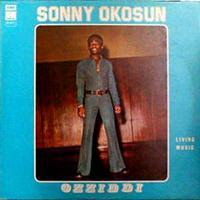

Before he cultivated his flamboyant social revolutioary image in the late 70s and 80s and before he added the "s" at the end of his last name, Sonny Okosun was a working-class roots rocker who came off like a cross between Jimmy Cliff and Cliff Richard. "Help" (from his 1972 debut) is an evergreen fave among folks who were in high school in the 70s but I first encountered the song via Onyeka Onwenu's discofied version on her 1981 Okosun-produced debut, Endless Life.

(Sonny reinvented himself again in the 1990s, this time as a Christian evangelist. Here's his his site.)


I don't have much to say about Black Children (a.k.a. Black Children Sledge Funk Band) except that they were an offshoot of The Strangers and I think I might have one of their records somewhere. If I find it, I'll definitely be posting it.

If the West had Ofege, Tirogo and BLO, the East had Aktion, a hard rock band based in Warri. They make two appearances here, and we'll be hearing some more of their stuff in the future.


After the demise of The Wings, Apostles of Aba filled the vacant role of Everybody's Favorite Eastern Band with their mix of Igbo folkiness and tasteful psychedelia. More from them later, too.


I was never much impressed by the cod-reggae stylings of Cliff David's Cloud 7, but apparently, enough people were to maintain their popularity well into the late 80s. Even today, they are one of the few bands of this era whose albums are widely available on CD, and they even got some international exposure in the early 80s when one of their tracks appeared on the Heartbeat Records comp Black Star Liner: Reggae From Africa. "Beautiful Woman" is their biggest hit.

(Oh yeah, Cloud 7's Ben Jagga and David Bull broke away from the band to form The Ice Cream, which sounded a lot like Cloud 7, but with less suckiness.)

I never quite understood why, in his seminal text West African Pop Roots, John Collins described Kris Okotie as "a Nigerian Bob Dylan figure," because he was actually an almost painfully literal Michael Jackson clone - complete with the aviator shades, the military dress jackets and the dry jheri curl. (And need I mention that I would have sacrificed my spleen to be as cool as him?) Twenty years later, listening to his warbling vocal delivery and propensity for saccharine balladry, I realize that when you look past the dancing and the glossy production and the tight leather pants, he really was an old-fashioned folk/country troubadour.


He was also pretty shrewd about using of the power that attended his massive fame: he tricked the public into accepting his kid sister Lorine as a credible singer despite the absence of any discernible talent on her person, and then turned his back on pop stardom at the exact moment that Nigerian popular music started to suck, publicly dedicating his life to Christ and establishing a very chic and lucrative ministry. In 2003 and 2007, he made unsuccessful bids for the Nigerian presidency.

Like Cloud 7, Sweet Breeze remains a favorite band in eastern Nigeria, specifcally Igboland (hmmm... now that I think about it, there is a heavy eastern/Igbo bias running through this entire compilation) and their 1970s albums can still be found in shops. Unfortunately, the same can't be said for the records they made as The EsBee Family, after super-producer Jake Sollo retooled them as a slick 80s boogie outfit. That shit was hot. (In fact, I think we need to have a special Jake Sollo post later, too.)

One World Another Strangers spinoff band. I'll be posting some of their music, too. Very funky stuff!


Christiana Essien was (and kinda still is) Nigeria's sweetheart. A beloved child star on the popular TV comedy Masquerade, she quit the show when she got married at age 20 to newspaper magnate Eddy Igbokwe, parked herself in the recording studio, and proceeded to establish herself over the course of the late 70s and the 80s as "Nigeria's Lady of Songs."

Christy's been out of the limelight for the past decade or so, concentrating on family and other ventures, but she recently announced that she'll be making a comeback to music in 2007. I doubt Mrs. Essien-Igbokwe realizes that she already made her comeback in 2002 when DJ Shadow played her bouncy 1980 disco cut "Rumours" on Gilles Peterson's Brownswood Basement show, igniting an intense Christymania amongst DJs, cratediggers and funk aficionados.


I'll admit that it's weird for me to see her become such a hipster icon because really, she's always been very, very square; kinda like a Nigerian Marie Osmond. Her goody two-shoes image and overbearing God-and-country messages made her seem like an uptight old aunt even when she was barely out of her teens. But it is interesting to hear the queen of moral hygiene grunting over sweaty, downright nasty tracks by BLO and Geraldo Pino's Show Train band on albums like One Understanding and Patience (her funkiest - and sexiest - album).

(Those aren't links to the actual albums but to some sample clips I swiped from eBay, where her records regularly change hands for hundreds of dollars. Who'd've thunk it?)


When mi was a yout', there was this schoolyard legend that Sir Victor Uwaifo's wife was actually a mermaid that he had captured and whom had bestowed him with wealth and an array of superhuman abilities. The evidence proferred to support this argument was usually the lyrics of one his signature tunes "Guitar Boy" ("If you see mami wata o/Never never you run away...") and the supposed fact that his wife was always shown seated in photographs and nobody ever saw her legs. Oh yes, there was also the fact that he ostensibly possessed an array of superhuman powers: singer, guitar wizard, TV star, sculptor, inventor, author, athlete, and tireless self-promoter. And these days, he hasn't let his position as Edo State Commissioner of Arts, Culture and Tourism get in the way of him handling his business, either. "Joromi" is his other signature tune, inspired by his days as a champion wrestler.
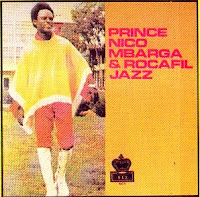

Most fans of African music know of Prince Nico Mbarga. Half-Nigerian and half-Cameroonian, he took the Congo guitar style that was tearing up dance floors throughout Francophone Africa and fused it with Anglophone highlife to create 1976's "Sweet Mother," widely feted as the bestselling and greatest African record of all time. Here, on "Item Eka Mi," Prince Nico presents a pretty straightforward Congolese rumba with a sizzling sebene and lyrics in the Efik language.

Prince Nico Mbarga never repeated the success of "Sweet Mother" (and how could he? That's like expecting Michael to make another Thriller) and he seriously lost his swagger when the Nigerian Aliens Expulsion Act of 1983 caused several key Cameroon-born personnel in his band to be deported. After that, he sort of drifted away from music and became more of a hotelier until his death in 1997. However, in 1982 or 83, he recorded a righteously hot album called Let Them Say that I am totally looking for; so if you see it anywhere, let me know!

Tony Grey Hmmm... What to say about Tony Grey? It just occurred to me that this song "She's My Girl" sounds a bit like early Sonny Okosun. Sonny branded his style of music and his band "Ozziddi." Tony called his sound and his band "Ozimba." When Sonny started wearing lion- and zebra-skin tunics and feathered headdresses, Tony Grey wore tigerskin and feathered headpieces. Sonny Okosuns is now an evangelist. Tony Grey is now a gospel singer.

Coincidence? I think not!

I like this song, though... Nice, ragged harmonies.

Well... That's all for now, folks!

Update 05/29/07: Oops... Didn't realize that the link in here had died. It's fixed now, though.

Monday, May 14, 2007

Chief Stephen Osita Osadebe (1936-2007)


I was just in the middle of composing an entry on highlife when I was informed that Chief Stephen Osita Osadebe had died.

If you've not heard of him, he's pretty much been one of the cornerstones of Igbo highlife of the past fortysome years. A party is not a party until his evergreen classic "Osondi Owendi" has been played a couple of times.


Rest in peace.

Sunday, May 13, 2007

Here's to lost tapes found!

One of the abiding tragedies of Nigerian popular music is the fact that there's so little audiovisual documentation of its development. It kinda hurts my heart when I watch, say, the extensive collection of vintage Congolese music performances on Innosita TV because they remind me so much of similar performances I used to watch of Nigerian music stars of the 1970s and early 80s (back when artists used to make videos for every track on their albums!). Not to mention the numerous TV variety shows like The Bar Beach Show with Art Alade, The Tee-Mac Show, Sir Victor Uwaifo's Expo! and The Bala Miller Show.

Today, I don't know if anybody knows for sure where any of that footage is, thanks laregly to the Nigerian Television Authority's shoddy job of protecting their archives. You see, during the lean days of the late 80s and early 90s, it became fairly standard procedure to dub over old tapes. What are you gonna do? Stuff like that happens from time to time, but it's the indiscriminate nature of it that beggars belief. From what I've heard, corner-cutting producers were sneaking into the tape libraries and snatching not just music videos, but even master copies of important television shows like The Village Headmaster and The Adio Family to tape their shows over. Huge chunks of historically significant popular culture disappear with the push of a "record" button (or rather, the simultaneous pushing of the "record" and "play" buttons for my old school heads).

Still, I remain hopeful that at least some of that footage has survived somewhere out there. Lately iNollywood.com has been streaming classic NTA shows like The New Masquerade and Second Chance, and even vintage TV commercials. I have no clue how they acquired this content--and believe me, I have asked--but if they've got it, maybe someone else has some other stuff too, like some heretofore lost performances by the likes of Bobby Benson, The Sunshine Sisters, and Sir Patrick Idahosa & His African Sound Makers.

Fela has fared a lot better than most Nigerian musicians in this regard because his colorful reputation has made him a subject of fascination for filmmakers across the globe. Even then, there's only so much existing performance footage of the man, and a lot of that can be attributed his abrasive personality as well: I can't remember the name of the European filmmaker who traveled to Lagos to shoot a Fela documentary and had to go home with his dreams crushed after the Chief Priest demanded an exorbitant sum for the rights to film him; former NTA producer Chris Obi-Rapu has revealed that plans were in motion for Fela to get his own TV show in the 1970s but network got scared and pulled the plug; and then there was Fela's self-produced hagiopic, The Black President, whose master print was destroyed when soldiers burned down his house in 1977.

This makes it all the more a joy to behold previously unseen footage, especially when its from the less-documented early periods of Fela's career. I'm talking, of course, about the DVD Ginger Baker in Africa.

For those who don't know the story, here's a quick recap: In 1971, Ginger Baker, the drummer of the legendary rock group Cream, decided to take a trip to Nigeria, traveling across the Sahara desert. Once in Nigeria, he situated himself within the local music scene, built the first multitrack recording studio in West Africa, and planted the seeds for the "Afro-rock" era by forming the band SALT (featuring Berkley Jones, Laolu Akins and Mike Odumosu--who would break off as the power trio BLO--and the Lijadu Sisters).

Apparently, Baker filmed some of his travels but sat on the footage for more than 30 years. Now, finally, he's unveiled it and given us an intriguing (if nebulous) inside look at the Nigerian music scene in the immediate post-Biafra period. To be honest, the film is very clearly a product of its drug-addled times, with incoherent editing reminiscent of the LSD scene from Easy Rider and meandering narration by Baker. But it's worth it all to see the documentary's centerpiece: Baker reunites with his old friend Fela Ransome-Kuti as the rising king of afrobeat performs in a rain-soaked open-air nightclub in Calabar:


Apropos of nothing, I'll mention right off the top that I was rather tickled to see the "Luna Nite Club" sign at the end, because that place was still rocking on Fosbury Road when I was growing up in Calabar in the 80s.

Other than that, while the sound isn't great, but I think it's still a lot of fun to watch what a good time he seems to be having onstage (especially as he playfully "manhandles" his dancers and players). The show seems a lot looser than than his later performance style, and he's still rocking that weird snakeskin vest thing he used to wear before he got into the custom-made embroidered jumpsuits. Ginger Baker has got to have more stuff like this, and I hope he puts it out soon. (Come to think of it, Roy Ayers has said that he's got a boatload of footage from his stay with Fela in 1979/80... Give up the goods, Roy!)

Tuesday, May 08, 2007

So let's get into some music...

So the Nigerian presidential elections went down over over two weeks ago, and the gift of clairvoyance was not required to foresee the outcome from miles away. It was, as they say on the street, not so much of an "election" as it was a selection.

But life goes on.

As the dust settles, I make preparations to resume production on TOO MUCH BEAUTIFUL WOMAN. Much of it I can't talk about right now. And I'm not quite in the mind state to post a lot of the long-overdue vault entries. Truth is, I just haven't felt like re-visiting that period too much lately: episodes that once played to me like quixotic adventures now resonate in my soul as crushing humiliations. I know this self-consciousness about last Summer of Chaos is an ephemeral thing, though; it'll pass. But in the meantime, what on earth do I blog about?

I've been thinking about turning this into an audioblog of sorts in the interim, just to keep things interesting... I'll admit that I have been largely inspired by Tambour d'Afrique, a cool info site about Congolese music that doubles as a vehicle of self-discovery and identification for my friend, Ms Bazu. Likewise, I peer with admiration at blogs like Voodoo Funk and Sea Never Dry, with their efforts to shed light on obscure and forgotten African pop music. Also you may recall that in my my first real post on this blog, I toyed with the idea of using this space to share some rare and out-of-print albums that I feel are worth checking out.

So that's what I'm gonna do. For a while, anyway. We'll see how it works out. So let's get started, shall we? The first album I'm putting up here is...


Various Artists
Flashback: A Decade of Hits 1970-1980, Vol. 1
Nijar Records, 1998

No, the LP label pictured above is not the actual album cover, but I post it because

a) the real cover is quite ugly, comprising a "political" map of Nigeria ripped from a primary school atlas and a partial, misspelled listing of the featured artists by the side--all rendered in patriotic green and white hues

b) I feel like drawing attention to the fact that this CD is actually a plagiarized compendium of the mid-1970s Nigerian pop compilations EMI Super Hits and EMI Super Hits 2. You see, I'm not certain that the CD is "officially" out-of-print, but I'm pretty sure that its producers are bootleggers, so fuck 'em (besides, the album is genuinely hard to find)

I found this cheaply-produced CD back in the summer of 1999, in a Chinatown adult video store that for some reason also stocked mapouka and soukous videos (in the latter case, mostly Dany Engobo et les Coeurs Brises and Yondo Sister) and a smattering of African CDs.

Now bear in mind that I didn't move to Nigeria until 1981, so most of the songs listed on the back were effectively before my time.

(I did recognize a few of the artists, though: when I was a kid, I had heard university students speak reverently of the rock band Ofege; Bongos Ikwue remained popular into the 80s via the songs he composed for the TV soap opera "Cock Crow at Dawn," and later for a rumor that one of his biggest hits was written for a certain First Lady with whom he had allegedly enjoyed a passionate affair and possibly sired a child; Sweet Breeze had added some American-accented female vocalists, re-christened themselves The EsBee Family and scored some success in the first half of the 80s with slick, post-disco boogie jams like "My Man Understands" and "I'll Give You Love"; Tony Grey hung around for a bit, too)

Yeah, I was curious. I copped the CD, threw it into the Discman and was immediately engulfed by feelings of familiarity and strangeness; turns out that I actually had heard a lot of these songs when I was a kid, but in many ways I knew very little about the world they emerged from. This was a generation that had just survived the Biafran War, one of the most harrowing conflicts Africa had seen at that point, and was trying to find a new identity in the post-highlife landscape.

What's often surprising to many who encounter this music for the first time is the extent to which they constructed that identity with input from "white" rock and pop bands like The Beatles, The Monkees, Cream and Santana. When most people think about Nigerian music (particularly of the 1970s vintage) they tend to think about Fela, afrobeat, and hard-edged funk. But that wasn't the only sound rocking in Nigeria... Hell, it wasn't even the most popular thing going. Weird-sounding, semi-derivative pop-rock like this was.

I generally don't play this kind of music for folks too much because I've always felt its appeal was limited. I'm never sure whether my own ardor for it is based on its musical merit or my own enlarged sentimentality. I mean, even when I was seven years old, I knew that most of the lyrics--and even a lot of the vocals--on these records left a lot to be desired (the musicianship was usually pretty sharp, though). But it seems that a lot of folks are really picking up on this stuff these days.

Well, I'll let you be the judge. If you like this kind of stuff, I've got plenty more of it to share.

>DOWNLOAD LINK<