Tuesday, May 29, 2007

I wanna BLO your mind

Damn, am I so tired this evening that I have resorted to that lowest of all humor forms, the pun?

Anyway, I'm not gonna talk too much tonight... I'll just post the music and give some backstory on it tomorrow.


The band is BLO. The album is Chapter One. The year is 1973.

>DOWNLOAD IT!<

Next morning: Aargh! Just realized I accidentally set the file to "private"! That's fixed now.

Double aargh!: And now I find that I ballsed up the track numbering and the artwork attached to some of the tracks.

Rest assured that the track order is correct and that there are only 8 tracks on this LP rather than 17. The artwork issue (for those who are inclined to care about such) may be remedied by copying/dragging the above album cover and installing it in place of the Step Three cover that might accompany a few of the tracks.

Sunday, May 27, 2007

Remembering the Titans: John Wayne and Segun Bucknor

I swear, sometimes there is nothing cooler in life than the feeling of freedom you get on a Sunday evening when you know you don't have to go to work the next day. God bless Memorial Day!

Today has mostly been rewarding... I did some writing (a music piece for the legendary Lagos Daily Times... yep, they're coming back!), picked up the suit I'm wearing to my friends Enyi & Megan's wedding next week (snazzy!), learned a few Seu Jorge songs on guitar ("Tive Razao" and "São Gonça"), then listened to a lot of early 1990s R&B (seriously: I really do miss Hi-Five sometimes, yo).


I'm kinda pissed at myself for forgetting to write something yesterday about John Wayne's centenary. (And this is supposed to be the time of year we honor great American heroes too!) But hey... there's already a gang of people talking plenty about it. So instead, I'll pay tribute to a different, non-American hero... Mr. Segun Bucknor.


Segun Bucknor is a semi-forgotten figure in the history of Nigerian music, so much so that the only somewhat decent photo I could even find of him is the obscure image from the cover of the compilation Strut released a few years ago. His records are as hard to find as hen's teeth, and he's usually only mentioned as a footnote to Fela, as one of his lesser contemporaries on the late-1960s Lagos music scene.

Actually, the connection to Fela goes back a bit further than that. Segun Bucknor was born in 1946 into a well-regarded Lagos family of musicians; his cousin Wole--as part of the Afro-Jazz Group that also included Bayo Martins and Zeal Onyia--was a Nigerian jazz pioneer who tutored young Fela Ransome-Kuti on the piano.

(Wole Bucknor also featured as a member of an early version of Fela's Koola Lobitos and fathered at least one child with Fela's younger sister, Yemisi Ransome-Kuti. He went on to become the Nigerian Navy's director of music, and I think he is also the father of popular Lagos wedding planner and socialite, Funke Bucknor.) (Edit: Actually, he is not; Funke Bucknor-Obruthe is Segun's daughter, as is media personality Tosyn Bucknor.)

As a student at the venerable King's College, Bucknor sang in the choir, and at the age of 15 he got the chance to play and recorded with highlife bandleader Roy Chicago's Rhythm Dandies dance band. By 1964, highlife was becoming old hat for post-independence Nigerian youth; a Beatles-aping quartet called The Cyclops had inspired a wave of high school rock & roll bands. With three school friends (including future esteemed photojournalist Sunmi Smart-Cole) and played mostly covers of popular pop and rock songs. The following year, he left the band to study liberal arts and ethnomusicology at New York's Columbia University, and it was during his three-year sojourn in the US that his imagination was captured by a sound that had heretofore not made much of a splash in Nigeria--soul music, particularly the music of Ray Charles.

Bucknor sought to introduce soul music to the Lagos scene when he returned to Nigeria in 1968, but he found that he had been beaten to the punch by new bands like The Strangers (led by organist Bob Miga), the Hykkers (featuring guitarist Jake Sollo, later of The Funkees, Osibisa and general awesomeness) and most of all by "Nigeria's James Brown," Geraldo Pino (who was actually Sierra Leonean).

Bucknor swiftly reconnected with his Hot Four buddies and they formed a new band called The Soul Assembly, recording two sides "Lord Give Me Soul" and "I'll Love You No Matter How." The Soul Assembly disbanded in 1969 and reformed as Segun Bucknor & The Assembly, this time moving away from straight imitations of US soul and toward a more organically African expression of soul music. As has often been the case throughout the history of African popular music, Afro-Cuban rhythms served as the bridge between the Motherland and the New World, as evidenced on tracks such as "That's The Time" and "Love and Affection."

As Bucknor further developed his brand of Afro-Soul, he cultivated a flamboyant visual style to accompany it. Eschewing the sharp western-style suits that characterized popular musicians of the day, he and his band (now renamed The Revolution) appeared shirtless, festooned with cowrie shells. Bucknor shaved his hair into a demi-mohawk and added to the stage show a trio of insane, booty-shaking nymphettes called The Sweet Things:


Oh yeah, I should mention that this here footage is, of course, poached once again from the Ginger Baker in Africa DVD (and to think that I said there was hardly any good stuff on it!) Director Tony Palmer is obviously quite entranced by the Sweet Thing dancers (and can you blame him?) so Bucknor barely gets any screen time here, but if you can control your blink reflex, you can spot him barking into the microphone behind the organ, wearing a green waistcoat. But Palmer sure loved filming those Sweet Things, ah tell yuh whut... He even had them stage another performance in Fela's Afro-Spot in Surulere specifically for documentation purposes (ah... yes. "documentation."That's what we're calling it!):

Sorry for the crappy quality at the beginning of both clips, y'all... I'll try to fix that later.)

Lately, a lot of music writers have tended to write Bucknor off as a Fela imitator or follower, but watching that footage, I can't help but wonder about the degree to which Bucknor influenced Fela in terms of visual presentation (he rocked the "jungle" costumes and the scantily-clad girl dancers first) and even in terms of the fusion of soul and African sounds.

One area in which I am fairly certain that Fela influenced Bucknor, though, is the in the increasing social commentary in songs like "Son of January 15th," (the date of the 1966 military coup d'etat that usurped Nigeria's First Republic) and "Pocket Your Bigmanism" (an indictment of the new Nigerian upper class).

In 1975, feeling that the cycle of Afro-rock/soul bands had run its course and was losing out to both the encroaching DJ culture as well as to the new generation of Yoruba juju musicians that had emerged in Lagos since all the Eastern musicians deserted the city during the civil war, Segun Bucknor disbanded the Revolution and concentrated on journalism. He still lives in Lagos and very occasionally performs, but I kinda wish he had kept going through the 1970s like Fela did and claimed his rightful place in the pantheon of innovators in Nigerian popular music.

Here's a couple more tracks from him:

"La La La (Hard Version) (Part 1)"

"Smoke"

"La La La (Acoustic Version)"

"Who Say I Tire"

"Dye Dye"

Happy Memorial Day, everyone!

The information in this blog entry was gathered from Sue Bowerman and Quinton Scott's interview with Segun Bucknor in the Poor Man No Get Brother CD booklet, the 1975 Segun Bucknor interview included in Musicmakers of West Africa by John Collins, "What happened to Nigeria’s Pop Music of the 60s?," an article by Sunmi Smart-Cole, and a little random hearsay.

Update 05/28/07: Part of the reason I have undertaken this modest chronicle of Nigerian popular music is because there really is no central, reliable source for this information available online. So I cringe when I find that my attempt to provide such a source actually contains inaccurate information. I'm working on that, though... For now, a lot of my sources are second- and thirdhand, and things sometimes get misinterpreted in transmission. I edited this post to correct the following factual errors:

- Captain Wole Bucknor is Segun Bucknor's cousin, not his brother.
- the percussionist in the clip is not Sunmi Smart-Cole; Smart-Cole was indeed a founding member of the Hot Four and the Soul Assembly, but when the latter band was dissolved, Bucknor formed the Assembly with all new members.

Update 06/13/07: I re-upped the Segun Bucknor the five Segun Bucknor tracks and added two more: "Who Say I Tire" and "Dye Dye."

Update 03/01/08: Thanks to input from Seal67, I changed the bit where I said the Strangers were led by highlife bandleader Bobby Benson's son Tony. While I was here, I made the corrected about Funke Bucknor, too.

Friday, May 25, 2007

I'll say it again: O F E G E


For a band that was so insanely popular, Ofege seem to have had frustratingly little written about them. They usually garner a cursory mention at best in most books about African pop, they don't get written up in even the most fastidious magazines, they are rarely ever included on compilations of Afro-funk and rock. Until their recent embrace by the psychedelic rock community, Google searches on them barely shored up any significant responses. If not for the persistent, nostalgic (and often contradictory) ramblings of various aging Nigerian hipsters, I might be tempted to believe that their own-time renown was little more than a myth.

The cloud of mystery surrounding Ofege is thickened by the fact that even the sleeve notes on their albums are woefully inadequate in providing us with much knowledge about the band. Even their debut, Try and Love offered only this sparse scrawl on the back on the album to introduce the new band on the scene:

Music for all songs - Meme
Lyrics for all songs - Melvin
Except It's not easy - Alade
Produced and directed by Odion Iruoje
Recording Engineers - Emmanuel Odenusi/Kayode Salami


Thankfully, Ofege's sophomore effort, 1975's The Last of the Origins at least lists the names the musicians on the back. So we learn that Ofege is made up of Paul Alade (bass, vocals), Dapo Olumide (keyboards), Melvin Noks (whose government name I'm told is Melvin Anokuru, though I've also heard him referred to as Melvin Ukachi) (guitar, lead vocals, percussion), M-Ike Meme (drums, vocals, percussion) and Filix Inneh (vocals, gong) (GONG?!?)

Unfortunately, in none of the photos of the band I've ever seen are they they shown playing, or even holding their instruments, so it's hard to correlate the names to any of the faces shown on their album covers.

Anyway, The Last of the Origins. I have no idea what that title is supposed to mean, and I'll admit that this is the Ofege album I listen to least. While Try and Love had the ebullient charm of a bunch of stoned teenagers just rocking out for the funk of it, it seems that Odion Iruoje tried a bit too hard to groom them into a "real" "professional" band.

The album is mixed in a much more balanced fashion than the front-loaded guitaristics of the debut, and there's a lot more emphasis placed on the singing and lyrical content... Which are mostly not that great, despite songwriting contributions by all the band members. The guitar hysterics--the thing that the band does best--in general are pretty much reined in, and oddly enough, Melvin Noks is credited as the rhythm guitarist on this album, with the "1st guitar" credit going to Berkley Jones (of BLO) and "2nd guitar" to Olushoga Benson. To top it all off, after being recorded in Lagos, the tracks were shipped off to Abbey Road where they were remixed and "sweetened" with string synth textures by Francis Monkman of the British proggers Curved Air.

I'm told that this album was released shortly after the boys graduated from St. Gregory's, and I know that some (if not all) of the members went on to attend the University of Lagos. I can only assume that they continued to play as a band there, but study time must have gotten in the way of studio time, because Ofege would not put out another album until 1977's buoyant Higher Plane Breeze (which, hopefully, I will be posting soon).

DOWNLOAD THE LAST OF THE ORIGINS!

Update o5/01/07: Link resurrected.

Wednesday, May 23, 2007

Ofege. (Need I Say More?)


Probably.

Originally, I had planned to chronologically trace the development of Nigerian pop music from the 1950s and 60s up through the 80s in a series of droll, but carefully thought-out essays. But as it turns out, I'm not feeling too droll at the moment and I have like three overlapping deadlines to make by tomorrow morning, so my concentration is not at the level it could be.

Yet, even as the pressures of life bear down on me, I want to rock.

About this time last year, in the early days of this blog, I posted a song called "Gbe Mi Lo" by a band called Ofege as the mp3 of the day. Quite a few folks dug it and wanted to hear (and know) more. Of course, the first Flashback comp contained two more Ofege songs (both taken from the same LP as "Gbe Mi Lo") so I might as well just give y'all the rest of the album, yeah?

At this point I should mention that the album cover featured at the top of this post is not the album in question... I just posted it because I think it's the coolest-looking of their album covers (which tend to be much less expressive than their music) and the above-pictured longplayer, Higher Plane Breeze, is (I think) their best album, which I have a lot of affection for and I will probably be posting up later. Besides, this photo perfectly encapsulates the band's general stance and style.

Ofege was formed by a bunch of teenage hipsters at the prestigious St. Gregory's College in the Obalende area of Lagos. I believe I previously described them as "a cross between the Bay City Rollers and Santana" or something like that. I also said that I wished that they worked more on their songwriting and singing, but hey... It's clear that for Ofege, songs were largely incidental, little more than excuses to launch into insane, distorted guitar solos. It's also very clear that they smoked a lot of weed.

You are about to listen to their first album, TRY AND LOVE, released in 1974.


DOWNLOAD IT!

Update 06/01/07: The link is re-upped.

Saturday, May 19, 2007

Let's Flash Back Again (Like We Did Last Week)!

When I decided to start sharing music here on a regular basis, I never intended to post exclusively - or even primarily - Nigerian music, but due to the overwhelmingly positive feedback I've gotten on the Flashback compilation, I think I tarry a while in the Naija crates and put up some more music from the 1970s and 80s. I just need to start mp3ing up the music from the original vinyl, and I have to admit that I really have little clue of how to go about doing that. Any recommendations on the best - by which I mean "least cumbersome" - Mac OS X-compatible vinyl-ripping soft/hardware?

But just to keep the conversation moving along while I sort out that business, I might as well just throw on some stuff I already have available in digital format (or can filch from other sources). To that effect, my friends, I offer you...

Various Artists
Flashback II (Dedicated to the Memory of Spud Nathan)
Naija Records, 2000

Yes, our buddies at Naija Records did finally get around to serving up a second handful of oil boom-era pop, rock, reggae and highlife jams. Seemingly, the adjustment in the spelling of the label's name indicated a change in corporate identity and policy as they actually compiled this disc themselves rather than just repackaging an older collection. Still, I doubt that they paid any kind of licensing or royalties to the original artists, so I have no qualms about sharing this album for free with as many people as possible.

>DOWNLOAD LINK<

Okay... Now that you've got the music, you can stop reading this, go back to whence you came and get your party on. Or you can sit here for a few more minutes and listen politely as I natter on about a few of the artists featured here:


The Wings were the preeminent band in early 70s southeastern Nigeria, a devastated and demoralized region whose short stint as the sovereign Republic of Biafra had recently been brought to an abrupt halt by the events of the Nigerian civil war (which we will not get into here). Out of this bleak climate a plethora of rock bands emerged, mostly for the purpose of entertaining the occupying federal Nigerian troops, who were just about the only people who had money to spend on recreation.

The Wings, however, had a much farther-reaching appeal, thanks largely to the enormous charisma of heartthrob frontman Spud Nathan (nee Jonathan Udensi), who led the group through such romantic hits as "Kissing You So Hard," "Gone With the Sun" and "Single Boy" and the song featured here, "If You Don't Love Me Girl."

The Wings story took a tragic turn in 1974 when Nathan - while riding to a gig in a car driven by guitarist Manford Best - was killed in an accident on the infamous Njaba Bridge in Imo State. (A decade later, another car crash on that same bridge would claim the life of ex-Funkees and Osibisa guitarist Jake Sollo.)

Nathan's death catapulted The Wings into a tailspin. Most of the band (and their fans) blamed Best for the accident since he had been behind the wheel. Also, he had allegedly had sex with a groupie in the brand new car before it had the chance to be properly "blessed," which was considered to be some bad, bad juju. To add insult to injury, while the rest of the band wanted to go on a yearlong hiatus to mourn Spud, Best insisted that The Wings resume activity immediately with him in the lead singer spot. Eventually, the band went on hiatus for two years while Best broke away and formed Super Wings to relatively little success, due to fan resentment over his role in Spud's death.


After two years of absence, the surviving Wings returned as Original Wings (a.k.a. Wings Original) with the smash hit Tribute to Spud Nathan album. (Inspired by this success, Super Wings immediately released their own Spud Nathan tribute album, and were greeted mostly with groans.) The Spud Nathan dedication featured here, however, is taken from the album Change This World.
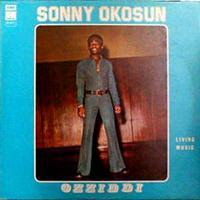

Before he cultivated his flamboyant social revolutioary image in the late 70s and 80s and before he added the "s" at the end of his last name, Sonny Okosun was a working-class roots rocker who came off like a cross between Jimmy Cliff and Cliff Richard. "Help" (from his 1972 debut) is an evergreen fave among folks who were in high school in the 70s but I first encountered the song via Onyeka Onwenu's discofied version on her 1981 Okosun-produced debut, Endless Life.

(Sonny reinvented himself again in the 1990s, this time as a Christian evangelist. Here's his his site.)


I don't have much to say about Black Children (a.k.a. Black Children Sledge Funk Band) except that they were an offshoot of The Strangers and I think I might have one of their records somewhere. If I find it, I'll definitely be posting it.

If the West had Ofege, Tirogo and BLO, the East had Aktion, a hard rock band based in Warri. They make two appearances here, and we'll be hearing some more of their stuff in the future.


After the demise of The Wings, Apostles of Aba filled the vacant role of Everybody's Favorite Eastern Band with their mix of Igbo folkiness and tasteful psychedelia. More from them later, too.


I was never much impressed by the cod-reggae stylings of Cliff David's Cloud 7, but apparently, enough people were to maintain their popularity well into the late 80s. Even today, they are one of the few bands of this era whose albums are widely available on CD, and they even got some international exposure in the early 80s when one of their tracks appeared on the Heartbeat Records comp Black Star Liner: Reggae From Africa. "Beautiful Woman" is their biggest hit.

(Oh yeah, Cloud 7's Ben Jagga and David Bull broke away from the band to form The Ice Cream, which sounded a lot like Cloud 7, but with less suckiness.)

I never quite understood why, in his seminal text West African Pop Roots, John Collins described Kris Okotie as "a Nigerian Bob Dylan figure," because he was actually an almost painfully literal Michael Jackson clone - complete with the aviator shades, the military dress jackets and the dry jheri curl. (And need I mention that I would have sacrificed my spleen to be as cool as him?) Twenty years later, listening to his warbling vocal delivery and propensity for saccharine balladry, I realize that when you look past the dancing and the glossy production and the tight leather pants, he really was an old-fashioned folk/country troubadour.


He was also pretty shrewd about using of the power that attended his massive fame: he tricked the public into accepting his kid sister Lorine as a credible singer despite the absence of any discernible talent on her person, and then turned his back on pop stardom at the exact moment that Nigerian popular music started to suck, publicly dedicating his life to Christ and establishing a very chic and lucrative ministry. In 2003 and 2007, he made unsuccessful bids for the Nigerian presidency.

Like Cloud 7, Sweet Breeze remains a favorite band in eastern Nigeria, specifcally Igboland (hmmm... now that I think about it, there is a heavy eastern/Igbo bias running through this entire compilation) and their 1970s albums can still be found in shops. Unfortunately, the same can't be said for the records they made as The EsBee Family, after super-producer Jake Sollo retooled them as a slick 80s boogie outfit. That shit was hot. (In fact, I think we need to have a special Jake Sollo post later, too.)

One World Another Strangers spinoff band. I'll be posting some of their music, too. Very funky stuff!


Christiana Essien was (and kinda still is) Nigeria's sweetheart. A beloved child star on the popular TV comedy Masquerade, she quit the show when she got married at age 20 to newspaper magnate Eddy Igbokwe, parked herself in the recording studio, and proceeded to establish herself over the course of the late 70s and the 80s as "Nigeria's Lady of Songs."

Christy's been out of the limelight for the past decade or so, concentrating on family and other ventures, but she recently announced that she'll be making a comeback to music in 2007. I doubt Mrs. Essien-Igbokwe realizes that she already made her comeback in 2002 when DJ Shadow played her bouncy 1980 disco cut "Rumours" on Gilles Peterson's Brownswood Basement show, igniting an intense Christymania amongst DJs, cratediggers and funk aficionados.


I'll admit that it's weird for me to see her become such a hipster icon because really, she's always been very, very square; kinda like a Nigerian Marie Osmond. Her goody two-shoes image and overbearing God-and-country messages made her seem like an uptight old aunt even when she was barely out of her teens. But it is interesting to hear the queen of moral hygiene grunting over sweaty, downright nasty tracks by BLO and Geraldo Pino's Show Train band on albums like One Understanding and Patience (her funkiest - and sexiest - album).

(Those aren't links to the actual albums but to some sample clips I swiped from eBay, where her records regularly change hands for hundreds of dollars. Who'd've thunk it?)


When mi was a yout', there was this schoolyard legend that Sir Victor Uwaifo's wife was actually a mermaid that he had captured and whom had bestowed him with wealth and an array of superhuman abilities. The evidence proferred to support this argument was usually the lyrics of one his signature tunes "Guitar Boy" ("If you see mami wata o/Never never you run away...") and the supposed fact that his wife was always shown seated in photographs and nobody ever saw her legs. Oh yes, there was also the fact that he ostensibly possessed an array of superhuman powers: singer, guitar wizard, TV star, sculptor, inventor, author, athlete, and tireless self-promoter. And these days, he hasn't let his position as Edo State Commissioner of Arts, Culture and Tourism get in the way of him handling his business, either. "Joromi" is his other signature tune, inspired by his days as a champion wrestler.
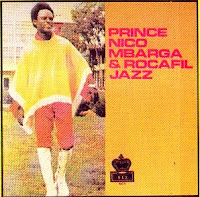

Most fans of African music know of Prince Nico Mbarga. Half-Nigerian and half-Cameroonian, he took the Congo guitar style that was tearing up dance floors throughout Francophone Africa and fused it with Anglophone highlife to create 1976's "Sweet Mother," widely feted as the bestselling and greatest African record of all time. Here, on "Item Eka Mi," Prince Nico presents a pretty straightforward Congolese rumba with a sizzling sebene and lyrics in the Efik language.

Prince Nico Mbarga never repeated the success of "Sweet Mother" (and how could he? That's like expecting Michael to make another Thriller) and he seriously lost his swagger when the Nigerian Aliens Expulsion Act of 1983 caused several key Cameroon-born personnel in his band to be deported. After that, he sort of drifted away from music and became more of a hotelier until his death in 1997. However, in 1982 or 83, he recorded a righteously hot album called Let Them Say that I am totally looking for; so if you see it anywhere, let me know!

Tony Grey Hmmm... What to say about Tony Grey? It just occurred to me that this song "She's My Girl" sounds a bit like early Sonny Okosun. Sonny branded his style of music and his band "Ozziddi." Tony called his sound and his band "Ozimba." When Sonny started wearing lion- and zebra-skin tunics and feathered headdresses, Tony Grey wore tigerskin and feathered headpieces. Sonny Okosuns is now an evangelist. Tony Grey is now a gospel singer.

Coincidence? I think not!

I like this song, though... Nice, ragged harmonies.

Well... That's all for now, folks!

Update 05/29/07: Oops... Didn't realize that the link in here had died. It's fixed now, though.

Monday, May 14, 2007

Chief Stephen Osita Osadebe (1936-2007)


I was just in the middle of composing an entry on highlife when I was informed that Chief Stephen Osita Osadebe had died.

If you've not heard of him, he's pretty much been one of the cornerstones of Igbo highlife of the past fortysome years. A party is not a party until his evergreen classic "Osondi Owendi" has been played a couple of times.


Rest in peace.

Sunday, May 13, 2007

Here's to lost tapes found!

One of the abiding tragedies of Nigerian popular music is the fact that there's so little audiovisual documentation of its development. It kinda hurts my heart when I watch, say, the extensive collection of vintage Congolese music performances on Innosita TV because they remind me so much of similar performances I used to watch of Nigerian music stars of the 1970s and early 80s (back when artists used to make videos for every track on their albums!). Not to mention the numerous TV variety shows like The Bar Beach Show with Art Alade, The Tee-Mac Show, Sir Victor Uwaifo's Expo! and The Bala Miller Show.

Today, I don't know if anybody knows for sure where any of that footage is, thanks laregly to the Nigerian Television Authority's shoddy job of protecting their archives. You see, during the lean days of the late 80s and early 90s, it became fairly standard procedure to dub over old tapes. What are you gonna do? Stuff like that happens from time to time, but it's the indiscriminate nature of it that beggars belief. From what I've heard, corner-cutting producers were sneaking into the tape libraries and snatching not just music videos, but even master copies of important television shows like The Village Headmaster and The Adio Family to tape their shows over. Huge chunks of historically significant popular culture disappear with the push of a "record" button (or rather, the simultaneous pushing of the "record" and "play" buttons for my old school heads).

Still, I remain hopeful that at least some of that footage has survived somewhere out there. Lately iNollywood.com has been streaming classic NTA shows like The New Masquerade and Second Chance, and even vintage TV commercials. I have no clue how they acquired this content--and believe me, I have asked--but if they've got it, maybe someone else has some other stuff too, like some heretofore lost performances by the likes of Bobby Benson, The Sunshine Sisters, and Sir Patrick Idahosa & His African Sound Makers.

Fela has fared a lot better than most Nigerian musicians in this regard because his colorful reputation has made him a subject of fascination for filmmakers across the globe. Even then, there's only so much existing performance footage of the man, and a lot of that can be attributed his abrasive personality as well: I can't remember the name of the European filmmaker who traveled to Lagos to shoot a Fela documentary and had to go home with his dreams crushed after the Chief Priest demanded an exorbitant sum for the rights to film him; former NTA producer Chris Obi-Rapu has revealed that plans were in motion for Fela to get his own TV show in the 1970s but network got scared and pulled the plug; and then there was Fela's self-produced hagiopic, The Black President, whose master print was destroyed when soldiers burned down his house in 1977.

This makes it all the more a joy to behold previously unseen footage, especially when its from the less-documented early periods of Fela's career. I'm talking, of course, about the DVD Ginger Baker in Africa.

For those who don't know the story, here's a quick recap: In 1971, Ginger Baker, the drummer of the legendary rock group Cream, decided to take a trip to Nigeria, traveling across the Sahara desert. Once in Nigeria, he situated himself within the local music scene, built the first multitrack recording studio in West Africa, and planted the seeds for the "Afro-rock" era by forming the band SALT (featuring Berkley Jones, Laolu Akins and Mike Odumosu--who would break off as the power trio BLO--and the Lijadu Sisters).

Apparently, Baker filmed some of his travels but sat on the footage for more than 30 years. Now, finally, he's unveiled it and given us an intriguing (if nebulous) inside look at the Nigerian music scene in the immediate post-Biafra period. To be honest, the film is very clearly a product of its drug-addled times, with incoherent editing reminiscent of the LSD scene from Easy Rider and meandering narration by Baker. But it's worth it all to see the documentary's centerpiece: Baker reunites with his old friend Fela Ransome-Kuti as the rising king of afrobeat performs in a rain-soaked open-air nightclub in Calabar:


Apropos of nothing, I'll mention right off the top that I was rather tickled to see the "Luna Nite Club" sign at the end, because that place was still rocking on Fosbury Road when I was growing up in Calabar in the 80s.

Other than that, while the sound isn't great, but I think it's still a lot of fun to watch what a good time he seems to be having onstage (especially as he playfully "manhandles" his dancers and players). The show seems a lot looser than than his later performance style, and he's still rocking that weird snakeskin vest thing he used to wear before he got into the custom-made embroidered jumpsuits. Ginger Baker has got to have more stuff like this, and I hope he puts it out soon. (Come to think of it, Roy Ayers has said that he's got a boatload of footage from his stay with Fela in 1979/80... Give up the goods, Roy!)

Tuesday, May 08, 2007

So let's get into some music...

So the Nigerian presidential elections went down over over two weeks ago, and the gift of clairvoyance was not required to foresee the outcome from miles away. It was, as they say on the street, not so much of an "election" as it was a selection.

But life goes on.

As the dust settles, I make preparations to resume production on TOO MUCH BEAUTIFUL WOMAN. Much of it I can't talk about right now. And I'm not quite in the mind state to post a lot of the long-overdue vault entries. Truth is, I just haven't felt like re-visiting that period too much lately: episodes that once played to me like quixotic adventures now resonate in my soul as crushing humiliations. I know this self-consciousness about last Summer of Chaos is an ephemeral thing, though; it'll pass. But in the meantime, what on earth do I blog about?

I've been thinking about turning this into an audioblog of sorts in the interim, just to keep things interesting... I'll admit that I have been largely inspired by Tambour d'Afrique, a cool info site about Congolese music that doubles as a vehicle of self-discovery and identification for my friend, Ms Bazu. Likewise, I peer with admiration at blogs like Voodoo Funk and Sea Never Dry, with their efforts to shed light on obscure and forgotten African pop music. Also you may recall that in my my first real post on this blog, I toyed with the idea of using this space to share some rare and out-of-print albums that I feel are worth checking out.

So that's what I'm gonna do. For a while, anyway. We'll see how it works out. So let's get started, shall we? The first album I'm putting up here is...


Various Artists
Flashback: A Decade of Hits 1970-1980, Vol. 1
Nijar Records, 1998

No, the LP label pictured above is not the actual album cover, but I post it because

a) the real cover is quite ugly, comprising a "political" map of Nigeria ripped from a primary school atlas and a partial, misspelled listing of the featured artists by the side--all rendered in patriotic green and white hues

b) I feel like drawing attention to the fact that this CD is actually a plagiarized compendium of the mid-1970s Nigerian pop compilations EMI Super Hits and EMI Super Hits 2. You see, I'm not certain that the CD is "officially" out-of-print, but I'm pretty sure that its producers are bootleggers, so fuck 'em (besides, the album is genuinely hard to find)

I found this cheaply-produced CD back in the summer of 1999, in a Chinatown adult video store that for some reason also stocked mapouka and soukous videos (in the latter case, mostly Dany Engobo et les Coeurs Brises and Yondo Sister) and a smattering of African CDs.

Now bear in mind that I didn't move to Nigeria until 1981, so most of the songs listed on the back were effectively before my time.

(I did recognize a few of the artists, though: when I was a kid, I had heard university students speak reverently of the rock band Ofege; Bongos Ikwue remained popular into the 80s via the songs he composed for the TV soap opera "Cock Crow at Dawn," and later for a rumor that one of his biggest hits was written for a certain First Lady with whom he had allegedly enjoyed a passionate affair and possibly sired a child; Sweet Breeze had added some American-accented female vocalists, re-christened themselves The EsBee Family and scored some success in the first half of the 80s with slick, post-disco boogie jams like "My Man Understands" and "I'll Give You Love"; Tony Grey hung around for a bit, too)

Yeah, I was curious. I copped the CD, threw it into the Discman and was immediately engulfed by feelings of familiarity and strangeness; turns out that I actually had heard a lot of these songs when I was a kid, but in many ways I knew very little about the world they emerged from. This was a generation that had just survived the Biafran War, one of the most harrowing conflicts Africa had seen at that point, and was trying to find a new identity in the post-highlife landscape.

What's often surprising to many who encounter this music for the first time is the extent to which they constructed that identity with input from "white" rock and pop bands like The Beatles, The Monkees, Cream and Santana. When most people think about Nigerian music (particularly of the 1970s vintage) they tend to think about Fela, afrobeat, and hard-edged funk. But that wasn't the only sound rocking in Nigeria... Hell, it wasn't even the most popular thing going. Weird-sounding, semi-derivative pop-rock like this was.

I generally don't play this kind of music for folks too much because I've always felt its appeal was limited. I'm never sure whether my own ardor for it is based on its musical merit or my own enlarged sentimentality. I mean, even when I was seven years old, I knew that most of the lyrics--and even a lot of the vocals--on these records left a lot to be desired (the musicianship was usually pretty sharp, though). But it seems that a lot of folks are really picking up on this stuff these days.

Well, I'll let you be the judge. If you like this kind of stuff, I've got plenty more of it to share.

>DOWNLOAD LINK<

Monday, April 09, 2007

So today is my birthday and I'm feeling a little bit more like a grownup

Not because of my somewhat astonishingly escalating age, of course... After all, that ain't nothin' but a number. The true indicator of my burgeoning maturity is my successful, repeated resistance of the urge to pummel people to a pulp when they say that Planet Terror is a better movie than Death Proof.

Seriously, though... What's up with that? Rodriguez's movie was like a way overlong and definitely less funny "Mad TV" sketch. I'm not saying that QT's offering ranks among his best work by any means - for one thing, it was a bit too talky even by his standards - but at least he seemed exhibit some understanding and empathy for the concept that he was working with rather than falling back on the adolescent impulse to make fun of bad movies by making a bad movie.

But hey, rather than me adding my feeble voice to the fiery debates that are certainly raging across the blogosphere at this moment, I'd rather just defer to much more articulate commentators than myself like Walter Chaw and Ryland Walker Knight, who both pretty much sum up the way I feel about the movie(s) in question. (Uh... That would be Grindhouse, just in case you were wondering.)

Something in particular that Knight says that struck a chord with me:

"For all his fanboy inanity and no matter his actual intentions, Tarantino, unlike his buddy Rodriguez, makes smart films that are fully aware of the film medium — and how it works onscreen, and on an audience. His films demonstrate his realization that film is not necessarily or primarily a narrative vehicle." (emphasis mine)

That particular line crystallized for me certain vaguely-formed thoughts and impulses I have about cinematic storytelling, the almost inherent aesthetic failure of Nollywood and how we kinda fell prey to those weaknesses in the making of TOO MUCH BEAUTIFUL WOMAN.

I think I'll blog about that later.

And man oh man... If i make any resolution on my birthday, I've got to stop saying "I'll blog about it later" and then not blog about it later. Not only do I have a whole backlog of "Making of TOO MUCH BEAUTIFUL WOMAN" entries from last summer that I haven't put up, but then there's a bunch of more recent stuff that I haven't even gotten around to.

(Of course, I don't expect anybody other than myself to care too much about this, but I really did want to get more consistent with this blogging shit.)

Okay... So it's a promise (to myself). More regular blog entries. Just because.

Saturday, March 10, 2007

Color me cynical...

So yeah, we were on the way to Yinka Davies and we still haven't gotten there, have we? I was trying to post some music and stuff in the next installment and I've been trying to figure out the most efficient way to do this in the new Blogger (which has been a bit hard to do since I've had limited Internet access over the past two weeks). I will get back to the story soon enough, but in the meantime, I just wanted to check in and throw up some random rants and raves.

A little while ago, someone asked me to speak a bit further about my disdain for "calabash cinema" and my frustrations with the expectations many western audiences have of African films that I briefly alluded to in this post. Just the other day, I was thinking about how to broach this subject when something threw the issue into stark relief for me. As it turns out, it wasn't a film but a book. Or rather, some people's reactions to a particular book.


The tome in question is Aya, an album bande dessinée (that's a fancy French way of saying "comic book") by Ivorian writer Marguerite Abouet and French illustrator Clément Oubrerie. fleur d'Afrique actually hipped me to it about a year ago when it was awarded the prize for Best First Album at the prestigious Angoulême festival, and a second volume has since been published in France. Now, thanks to the good folks at Drawn & Quarterly, a sumptuous English translation has hit the shelves on this side of the Atlantic. Needless to say, you should probably take a peek at it, as it is some pretty darn nifty stuff. Trust thine own eyes more than mine impeccable taste and astute recommendation? Fine; take a look at a preview here. Still not convinced? There's some additional pages to be viewed here (they're en français but if you ask me, Oubrerie's shimmering, elastic linework is adequately expressive in just about any lingua you please).

Aya is a sweet and breezy yarn centering around the title character, a regular 19 year-old girl in late-1970s Abidjan, as she and her two friends Bintou and Adjoa grapple with weighty issues like overbearing parents, too-aggressive boys, sneaking out of the house at night to hit the club, how to perfectly roll your tassaba in that inimitable African woman fashion when you walk and trying to figure out just what you're going to do with the rest of your life... Basically, regular 19 year-old girl shit. Imagine John Hughes or the Hudlin Brothers' House Party in Africa. Or maybe even Valley Girl. And just like those great teen comedies of the 1980s and early '90s, it's fairly lightweight in the plot department but mines resonance from the humor and humanity of its characters.

But as I said before, a certain kind of western audience often has a hard time digesting humanity in African stories (Lord knows they can barely swallow even the idea of African humor). It's not their fault, really... They're just not that used to seeing African stories in which the characters are presented as actual people rather than as people-shaped embodiments of social problems. Africans are not really people to identify with; they're people to feel sorry for, or superior to (depending on the particular political and philosophical temperament of the individual viewer). Or maybe to kinda admire for their naive joy and resilience in the face of crushing hardship. Just about every review of this book I’ve read gushes with palpable amazement at the fact that its characters are, y’know, so goshdarn relatable! The preface to the English edition, contributed by one Alisia Grace Chase, PhD of the University of Minnesota, acknowledges as much in the very first sentence:

"The amorous hi-jinks narrated in Aya seem so familiar, so nearly suburban in their post-adolescent focus on dance-floor flirtations, awkward first dates, and finding just the right dress for a friend's wedding, that to many western readers it may be difficult to believe they take place in Africa."

(Can't you just see the reader choking and sputtering in shock: What the--??? Where's the genocide? Where's the female genital mutilation? The forced marriage? The babies for us to adopt? I mean, this story is supposed to be about Africa, right? But-but-but these characters seem not too different from me and my people! They even watch "Dallas" and "The Six Million Dollar Man" on TV! This shit is totally BLOWING MY MIND, man!)

Dr. Chase then rightly indicts the media for its role in shaping and perpetuating the stereotypical image of Africa in the western popular imagination:

"Inarguably, the western world is becoming increasingly aware of the myriad cultures on this massively diverse continent, but swollen bellied children, machete wielding janjaweeds and too many men and women dying of AIDS continue to comprise the majority of visual images that dominate the western media."

Which makes it all the more unfortunate that she seems to fall into the same trap herself. Maybe it's just me being my cynical self, but somehow, Chase's subsequent explanation of Aya's social context comes off to me almost as a disclaimer of sorts. Like the reason Aya is not a grim narrative of African suffering is because it takes place during the belle époque of President Félix Houphouët-Boigny's "economic miracle" that made Côte d'Ivoire one of the most prosperous and poltically stable countries south of the Sahara for thirty-some years, with then-capital Abidjan notching up a glamorous rep as "the Paris of Africa."

In other words, this story is an anomaly. An African Elseworlds. A brief, amusing curiosity before we return to our regularly scheduled programming of Unremitting Misery, Hopelessness and Horror® that is the African Reality™. I call bullcrap.

When Chase surmises that "Aya's dream of becoming a doctor, while dismissed by her conservative father, was very much a possibility" is she suggesting that it's not a possibility today? When she wistfully reflects that "Bintou's hip-bumping moves in the open-air maquis and Adjoua's make-out sessions at the '1000 Star Hotel' were commonplace teenage pleasures that took place in such working class suburbs as Yopougon" does Chase honestly believe - even in the wake of an interminable brutal civil war - that Ivorian teenagers are not doing the exact same thing right now? Is the idea that people still make love in Africa and not just war that far-fetched?

African pleasure. It's a concept so rare as to be mythological in an African cinema that is hellbent on catering to a western audience that seems to want Africa to function as a deep, dark, truthful mirror that reflects back to them just how good they have it. That wants Africa to always teach it something, much like the fabled "magical negroes" of Hollywood lore.


Sometimes I wonder if that has something to do with why the world cinema elite continues to ignore Nollywood: the fact that these crude movies' devotion to sheer pleasure somehow deprives them of gravitas in the eyes of the self-appointed arbiters of cinematic veracity. I mean, just the other day I was reading the latest issue of Sight & Sound (well... it's the latest issue on the stands here, anyway)... The African Cinema issue. Which manages to avoid mentioning Nollywood even once. Ain't that some shit?

Look... I know that there's more than enough issues surrounding Nollywood's almost characteristic crappy writing, hammy acting and general technical ineptitude to keep the British Film Institute from taking the Nigerian movie industry seriously. Hell, I could even understand how a fairly conservative org like the BFI might shy away from recognizing movies primarily shot and distributed on video as "cinema" in the first place. But to put together an issue surveying the state of filmmaking throughout the continent and make not even a cursory mention of the first far-reaching, self-sustaining, indigenously popular film industry in African history that produces movies that Africans actually watch? Especially when they see fit to devote like a whole two-page feature to "white conscience" pictures like Blood Diamond, The Last King of Scotland and Catch a Fire in which Africa serves as little more than an exotic backdrop for white people learning shit? Alas and alack, Sight & Sound! As quoth Jeru da Damaja: "Ya playin' yaself!"

Damn... I'm rambling (as usual). I didn't mean to do that, fam. Like I said, I just wanted to post some rants and raves. And now that we've gotten past the ranting, let's rave a little, shall we?

Go pick up Aya now and thank me later.

Also, a few days ago, my man Temi drew my attention to an in-production Nigerian short film called Area Boys, directed by this morning to an in-production short film called Area Boys, directed by Omelihu Nwanguma.

Take a look at the trailer:

Looks pretty good, no?

It looks pretty good.

That's all I'm really gonna say for now, because if I talk any more, I might have to start hating. Hard. Actually, I think it looks damn good and I'm just a little bit jealous. Nwanguma seems to have succeeded in conveying at least some of that dynamic Lagos energy and grit that is absent from virtually ALL Nollywood movies and which I'll admit we failed to adequately capture during our first foray into shooting TOO MUCH BEAUTIFUL WOMAN (I'm sure Denis would remark favorably upon the abundant yellow hues in the color palette!). So yeah... I guess this is all the more motivation to step up our game in the next round of shooting.

Apparently, Nwanguma & co. are trying to raise some finishing funds over on the Area Boys website. I found it somewhat interesting that they've actually posted up their proposed budget (nobody - and I mean nobody - discloses that information in Nollywood) and believe it or not, the amount of money they're spending on this one short is roughly as much as the budget for the a lot of 2-part Nollywood features. I'm glad they're not skimping on quality. I get really excited when I see cats trying to raise the bar for the nascent New African Cinema, so I'm totally rooting for them. If you're all about supporting quality African film by African filmmakers telling African stories for African audiences, by all means, stop by and show them some love.

Okay... I've talked enough, haven't I? I'll stop for now, but I'll be back later.

And I will finish telling that damn Yinka Davies story.

Friday, February 23, 2007

Abolitionist drama Amazing Grace screens at Los Angeles Pan-African Film Festival!

...And in OTHER news: Abolitionist drama Amazing Grace screens at Los Angeles Pan-African Film Festival!


http://www.independentngonline.com/news/45/ARTICLE/21388/2007-02-22.html

"Jeta Amata’s 135-minute Amazing Grace was screened on Tuesday, February 13 and Saturday, February 17. It is the Governor Donald Duke beloved story said to have been penned by a slave ship captain after hearing it sung by the people captured, enslaved and transported in his ship. But like it happened at the Cannes Film Festival in France last year, the more acclaimed and better-packaged Amazing Grace by Michael Apted was a star attraction at PAFF. It was given a special screening on Thursday, February 15 and it attracted a higher gate fee, drew more crowd and better received. There was, however, no denying Jeta of his five minutes of fame. He shone like a million stars at the Saturday screening of his film and was seen in the company of some female admirers as he stepped out of the Magic Johnson Theatre in Crenshaw, LA, where all the films were screened."

Serendipitous, ain't it?

Wednesday, February 21, 2007

August 3, 2006 - “I’m a artist… and I’m sensitive about my s#!t” (Part Two)

(So... It's about time that I got back to posting blogs from the vaults and general backstory. Sorry I slacked off on this before, but things got kinda hectic during my last couple of weeks in Lagos and it actually takes a little time for me to "assemble" these entries. Pretty much all of them were written on the run, so I'll have half the entry composed on my laptop, then I got to find another quarter that's scribbled in one of my many notebooks, and locate various random paragraphs scrawled on the myriad scraps of paper constantly stuffed into the pockets of my jeans and compartments of my backpack. So organization is not necessarily my strong suit; believe me, Denis never let me hear the end of it. Anyway, let's continue with the story I was telling here.)


As it turns out, yesterday was the ninth anniversary of the death of Fela Anikulapo-Kuti. As such, there was a celebration of his life and legacy at New Afrika Shrine - the reconstituted version of the club Fela maintained as his personal court, soapbox, and alternate reality for more than two decades - as a prelude to the massive "Felabration" slated for October.

Denis and I want to go to the Shrine. We're both huge Fela fans; in fact, Fela was a bit of a catalyst in our friendship. We "met" a few years ago on the Okayplayer music board when he posted a poll posing the question "Who is the most prominent African musician - Myriam Makeba, Franco, Manu Dibango or Meiway?" Outraged, I immediately fired back with "How the hell you gonna make a post about important African musicians and not include Fela?" He calmly explained to me that he didn't really know all that much about Fela, having grown up in Francophone Africa, where the influence of a figure like Franco loomed a little larger. The truth is, at the time I was just really getting about Fela's music myself.

By the time I was coming up in the 1980s, Fela was a shadow of the fiercely creative and popular musician he had been in the previous decade. Since the 1977 government-mandated firebombing of his home and the resultant death of his mother, he seemed to be become less known for his music than for his controversial public antics--the weed, the nudity, the polygamy, the blasphemy, the highly theatrical presidential campaigns, the frequent trips to jail and drawn-out court cases--kinda like 2Pac would be in the '90s. His music wasn't played much on the radio and when it was, it tended to be humourous, relatively innocuous dance records like "Open and Close" and "Excuse-O." Our government was a fairly repressive military dictatorship, and just whistling one of Fela's more anti-establishment tunes like "Zombie" within earshot of any soldier, policeman, customs officer or even a traffic warden was enough to get you beaten within an inch of the pearly gates and thrown in jail.

In the eyes of a lot of middle-class parents (like mine), messing with Fela was a gateway to a seriously fucked-up life and they endeavoured to insulate their children from his influence the same way you do your best to keep your kids away from crack pipes, stripper poles and religious cults. Because, really, that's kinda what Fela fandom was: a cult. But it wasn't just a cult full of thieves, thugs and hookers, like most people thought; its membership spanned across all walks of society, including some sectors of the government. I was a late convert: Fela didn't really capture my soul until the day I was getting on the plane to leave Nigeria in the early '90s, but now that I was back, I was looking forward to making a pilgrimage to his sacred temple. Me and Denis had planned a trip to the Shrine for a long time and this seemed the best time to make it happen.

Except that Koko wasn't trynna hear it.

Not that he's not a Fela fan; he is--hardcore. In fact, he was the one who first introduced me to "Baba 70"'s music (or tried to, anyway) back in high school, and he always has a Fela tape in the car (along with a cassette of really cheesy '80s funk & R&B and Toni Braxton's first album, which he plays specifically when he wants to torture me and Denis). As a true Fela-head, he's been to the Shrine a couple of times and he had the portent that the night's event was going to be like an area boy* homecoming festival; unless one absolutely, positively needs to experience the feeling of blood gushing from one's forehead like a geyser as multiple beer bottles shatter upon one's cranium, it might be a good idea to put a considerable distance between oneself and that general area. Me and Denis tried to persist, but Koko was the one driving and if he said we weren't going to the Shrine, then we weren't going to the Shrine.

So there we were yesterday evening, sitting in the middle of one of Lagos's trademark traffic jams, listening to the radio. All the stations are playing Fela's classic jams (well, the two that weren't playing Christina Aguilera's "Ain't No Other Man" and that dreadful new Beyonce song every twelve minutes, anyway). As "Roforofo Fight" comes on, I'm reminded exactly how much Fela's music informed the creation of TOO MUCH BEAUTIFUL WOMAN. The very first scene I wrote in the script (the one where Boy scuffles in the street with the market woman Madam Kuku as a jeering crowd gathers around) was directly inspired by the abrupt, chaotic energy of this song. The second scene I wrote (which is now the first scene in the script) was inspired by "Water No Get Enemy." The go-slow scene was dictated by, of course, "Go Slow." Hell, even the fast-paced, semi-cartoonish mise-en-scene was less an attempt to emulate Guy Ritchie than it was a desire to achieve the kind of collage of vivid detail, grotesque humour and jarring juxtapositions that characterized the sleeve art Ghariokwu Lemi created for Fela's albums.

These thoughts only reinforced my belief that a visit to Fela's house would restore my sagging confidence, so I tried to gain some leverage for my case by cloaking my selfish desires in the guise of selfless professionalism:

"You know... This might be a good way to earn some much-needed production scratch. Straight No Chaser would probably pay good money for some pictures of that event."

"If you even THINK of taking a camera into that place---!!" Koko snapped. He took a breath, regained compsure and then sighed wearily. "See... That's the reason why we're not going to the Shrine. Because I don't plan to be the one to explain to your parents the events surrounding the death death of their son. Besides, weren't you the one who just had to see Yinka Davies tonight?"

Ah yes. Let's get things straight about that. While I do have the tendency to sometimes come off as an obsessive crackpot who's seen Vertigo four or five times too many, there was a fairly logical and practical reason for my yen to meet with Yinka. In fact, there were at least two such reasons:

1. At five o'clock in the morning, after two and a half hours of watching Nigerian videos that mostly looked like this


Get this video and more at MySpace.com

or this


the simplicity and spirituality of Yinka's video washed over me like a moment of clarity.

[I really wish I could include a clip of the video so you could see what I'm talking about, but I just can't find it anywhere.]

2. The Koyaanisqatsi-esque montage of the video impressed upon me the fact that what I really needed to hold this film together was a powerful score like the one Philip Glass provided.

Last time we were in Lagos, a ladyfriend mentioned to me that Yinka Davies was an old acquaintance and that I should give her a call to provide some music for the movie. I wasn't that interested, though. Pretty much from the beginning, we knew what kind of music we wanted for the movie. We were aiming squarely for a retro-romantic feel, so we wanted some afrobeat by Fela (or if that turned out to be too expensive, one of the many Fela disciples) and vintage highlife, rumba and cha-cha-cha from the 1950s and '60s. The idea of using contemporary music wasn't something we had on the agenda at all. In fact, we had something of a maxim: "No jeans and no rapping!" [I'll explain the jeans thing later, fam] But all of a sudden, I felt that Yinka probably did have a certain sensibility that could add something to the vision we were trying to realize.

So I called Yinka. I found her to be warm and cordial on the phone, though she seemed a bit curious about how I had gotten her number. I told her that B____ had given it to me. I told her that I had been a fan of her work as a lead vocalist in Lagbaja's band.

"That was a long time ago," she laughed.

"I heard you were doing some stuff with the Jazzhole folks now, right?"

"Well, I've worked with them in the past... But not at the moment."

"So... uh, what else have you been up to? I heard you were on the new Tony Allen record, too."

"Oh yes! Have you heard it?"

"No... Not yet. Heard good things about it, though." [I've since heard it; here's one of the tracks Yinka features on, "Losun"]

"So what's the deal, then? What can I help you with?"

I told her that I was a filmmaker and I was looking for music for my movie. I told her about seeing her video at 5 a.m. and I hoped that I didn't sound like a crazy person.

She was quiet for a moment and then she said "Why don't you come over and see me today?"

I was quite pleased.. If she's actually inviting me over to her home, that means that I didn't sound crazy, right?

Or maybe it just meant that I did sound crazy, but that she recognized a kindred spirit.


(to be concluded)
___________________________________________________

* The “area boy” is the Naija equivalent of the “rudeboy” or “gangsta” or “generally thugged-out individual that you don’t want to mess with”

Monday, February 19, 2007

How friggin' great is this video, though?


Yeah, yeah... I know you want to say that it kinda rips off Spike Jonze's clip for Fatboy Slim's "Praise You," but I think it's much better executed, especially since Conn's performance is so full of ebullience and sheer joy that it never comes off as malicious like Spike's work does sometimes.

I never knew Bobby was so little, though.

Sunday, February 18, 2007

This is Nollywood: The Movie

Once in a while, during the rare reprieves from the dizzying vortex of frustration that was the TOO MUCH BEAUTIFUL WOMAN shoot, Denis, Koko and I would sit back and ruminate upon our state of affairs.

Oftentimes during these moments of reflection, it would occur to us that the seemingly unending saga of us trying to get this damn movie made was actually richer in drama, intrigue, spectacle and pathos than the one we were trying to shoot. (In fact, for a time, Koko was seriously pushing for us to dedicate some resources to the production of a feature-length chronicle of our Nollywood journey. Proposed title? Three Blind Mice.)

Of course, we weren't the first ones to recognize the dramatic (and comedic) potential inherent in a candid Nollywood expose: Nick Moran's sardonic Nick Does Nollywood, documenting the English actor's botched 2003 attempt to produce a Nollywood feature, still airs fairly frequently on BBC Prime, and I was able to catch it one evening, during one of our rare reprieves from the dizzying vortex of frustration. Tears of weary recognition welled up in my eyes as I watched, it seemed, recent episodes from my life being re-enacted upon the screen by a hunky, shirtless white man:

SEE! The director struggle to juggle the inflated egos of temperamental actors!

SEE! The director flail desperately to set up shots in hostile filming environments!

SEE! The director's initial cockiness flag as he comes to the sad realization that he is in well over his head and hopes that the cast and crew don't notice the same!


By the time we got to the scene where Moran spends a good deal of time painstakingly setting up a shot, calls "Action!" and as if on cue, the sky opens up and a torrent of rain pours down, the feelings of deja vu were so overpowering that Koko actually hugged me and said "It's alright, man... It's alright."

While pretty damn entertaining, the slightly patronizing tone of Moran's doc ruffled a few feathers and so industry folks have since viewed any "outsiders" professing make inroads into Nollywood through a veil of suspicion. Later, when we were in Lagos shooting the TV pilot, an editor and a few actors told me that there were recently some other white folks in town doing a Nollywood behind-the-scenes, but nobody knew too much what became of the project. Well, I got an answer to that question when I happened to stumble upon ThisIsNollywood dot com earlier this evening.


Not too shabby, eh? I have to admit that I bristled a bit at about 1:33 where the nice lady says "We're doing films for the masses; we're not doing films for the elite and the people in their glass houses." It gets my goat whenever I hear people say shit like that. To me, it's nothing but a half-ass excuse to rationalize half-ass movie-making, but working in Nollywood you hear it a lot:

"...We're making African movies for African people, not for the judges at the Berlin Film Festival..."

"...Movies aimed at
real, everyday Nigerians, for the illiterate bus driver and market woman, not for the aristos drinking champagne on Victoria Island..."

"..Our audience is not highly sophisticated, so why should our movies be?"


I will never cease being offended by the idea that the "illiterate market woman" is somehow more of a "real" Nigerian than an educated professional by sheer virtue of being poorer and more ignorant. It's just a different version of the low expectation/definition by lowest common denominator syndrome that weighs down Negroes in the States: the more "ghetto" you are, the more inarticulate and uncouth, the "realer" a nigga you are. The fuck outta here with that bullshit.

Anyway, I was interested to learn that two of the the movie's three producers, Franco Sacchi and Aimee Corrigan, seem to be based here in the Bean. I'll probably holler at them later in the week, just to see what's up.

I wonder why This is Nollywood isn't screening at this year's African Film Festival at the Museum of Fine Arts, though. I actually forgot that it was going on this week, to be honest. I used to go to the festival every year, but I sort of gave up on it last year. Granted, it's a great site to sight some hot, Afrocentric boho sistas, but by and large, it depresses me.

Most African film festivals depress me a little, really, because it's kinda like a bizarro version of Nollywood: One panders to poor and uneducated Africans, the other panders to white liberals' fantasies of poor and uneducated Africans ("calabash cinema" is what we call the latter).

Neither one of them ever has relatable, well-rounded characters; in Nollywood it's because the producers are often inept and assume that the audience is too dumb to notice or care. In calabash cinema, it's because the audience really doesn't care about African characters as, y'know, characters, but prefers that they function as symbols of social problems. I really can't make up my mind which one I think is worse.

Either way, neither one of them really portray an Africa that I recognize from my own experience. And I know that a lot of Aficans agree with me. When I got to Nigeria last summer, I was really surprised to find so many people who didn't like Nollywood flicks at all and ridiculed me for my interest in them... In fact, for a while, it was a challenge for me to find anybody who did like them. (I eventually found a lot of them, though.) But that's why we're making TOO MUCH BEAUTIFUL WOMAN, isn't it? There's a pretty large segment of the audience that's not being served by the current crop of movies being made in and/or about Africa. And we intend to exploit that.

I did kinda want to see Abderrahmane Sissako's Bamako, though; not because it sounds particularly interesting to me (an African village puts the World Bank on trial? The premise might be a bit too polemical for my taste) but I missed seeing it when I went to the New African Film Festival in DC last December, and hey... It's got Danny Glover in it!

But dammit, it's too damn icy out for me to go anywhere, so I think I'll just wait for the DVD. Shit... I'm Nigerian, right? Home video is our preferred mode of movie viewing.

Friday, February 16, 2007

I almost want to see this movie


I never really got the appeal of Hugh Grant during his heyday in the 1990s. Actually, that's putting it a bit lightly; I was nothing short of bewildered by the fact that he was considered to be something of a sex symbol. I mean, since when did America develop the hots for foppish, effete Englishmen? While we're at it, why don't we crown Prince Charles a bird-chested love god?

It wasn't until Grant's subdued, laddish turn in Paul Weitz's About a Boy that I was able to see him as something other than a Bertie Wooster-esque stereotype,* and since then I've really wanted to check out more of his stuff.

Too bad this particular film comes courtesy of the man who gave us Two Weeks Notice and the Miss Congeniality movies. I'll have to pass, thanks.


*Interestingly, I read somewhere that Grant himself admitted that About a Boy is the only one of his films that does not make him cringe. I guess the guy has good taste, after all!

Monday, February 05, 2007

Since last we spoke...

An essay rehabilitating the image of much-maligned Negro movie star Stepin Fetchit?

An explanation for my seeming near-religious obsession with John Wayne?

Annotated reviews of various great yet underappreciated DC comics of the 1980s, maybe?

A wild-eyed rant about how the main reason so many people believe that Amy Winehouse's gimmicky and garish new album is superior to her confidently understated debut is because the contemporary "urban" audience is addicted to "production"?

My picks for the Oscars?

A review of Dreamgirls?

An account of bumping into former New Kid on the Block Jordan Knight in the movie theater when coming out of Dreamgirls?

Or perhaps an appreciation of Gjon Mili's 1944 short film Jammin' the Blues


and some random theorizing about its influence on the aesthetic of hip-hop videos of the late 1980s and early 1990s?

How about an argument positing that the true modern-day heir to pioneering American Negro filmmakers Oscar Micheaux and Spencer Williams, and the most important Black filmmaker in America today is not Spike, not Charles Burnett, but in fact, this guy?

It's been like three whole months since I last updated this blog and for the past month or so, my mind has been a revolving door for different subjects to blog about. I'll admit that most of these ideas have been pretty shitty. A handful of them have been cool. But ultimately, none of them have had much to do with the mission statement indicated in that little marquee at the top of the page ie talking about a little motion picture project I'm supposedly working on with two other guys? A little something called TOO MUCH BEAUTIFUL WOMAN?

Yeah... I haven't talked much about it with anybody since I got back to the States--I mean nobody, not even my family--mainly because... Well, to be honest, I don't really know what to say.

Last time you heard from me, I was still waiting to start production on the TV pilot. Well, I eventually went on and got through that and while I'll talk more about it a little later, for now I'll just say that it was an experience that was simultaneously exhilarating and enervating. On one hand, I came out of it feeling more confident and motivated as a filmmaker; on the other, it made me ever more conscious of the unique challenges inherent to making movies in Nigeria. Both of these discoveries ultimately impact the plan for completing TMBW.

I feel a lot wiser than I was when we started shooting the movie last July--we all do, really. Remember how I had to fight with Denis and Koko to reshoot two scenes? Now I feel like there's almost thirty scenes we could do better, knowing what we know now. I was hesitant to pitch the idea to my partners, but surprisingly, they agreed almost immediately. We've all put so much into this, and we appreciate all the support that our friends and families and even perfect strangers have given us, we're not willing to come back with anything less than best work we can possibly put together.

Originally, the plan was to return to shooting around February, but me and Denis talked about it... The thing that crippled us most--beyond even the lack of money--was underestimating the difficiulty of the Nigerian landscape and not allocating enough time to pre-production. We all want to get back to work as soon as possible, but we had to face the fact that if we go back to Nigeria right now, we're most likely going to face the exact same problems we did last time. So yeah... We decided that the smart thing to do would be to take a few months to plan this thing the right way before jumping back in.

Actually, after we made that decision, it occurred to me that there was even more reason for us to take a little hiatus. You see... 2007 is an election year in Nigeria, and I don't know if you know what often happens during election periods in so-called Third World countries but it's usually not the safest of environments. Hell, even when we were there last summer, the curfews and the killings had already started. It's probably not a great idea to return to Nigeria until after the elections... Which are in June. sigh... The thought of it kills us, but it's better it's better than some political thugs killing us, no?

More recently, another issue popped up that basically clinched it for us. Apparently, for various reasons, Nollywood is going on holiday. There have been moratoria on film production in the past, usually when the market has gotten too saturated with product. We can't get too much done during the break, so we're better off just staying where we are (me in Boston, Denis in New York, Koko in Lagos) and working on getting our organization as tight and effective as possible for when it's time to go back.

It hurts, though; after the intense high of being a flashy filmmaker in Nigeria for a few months, it's a massive crash coming back to life as an everyday schlub back in the States. Now I fully understand the way Denis described being back in the grey little town of Pointe Noire, Congo after our Nigerian adventure: "It's kinda like being dead."

Well... In the meantime, I'll be updating y'all on the pre-production process for phase 2 of the TMBW, as well as filling you in on the backstory of phase 1.

Aluta continua!